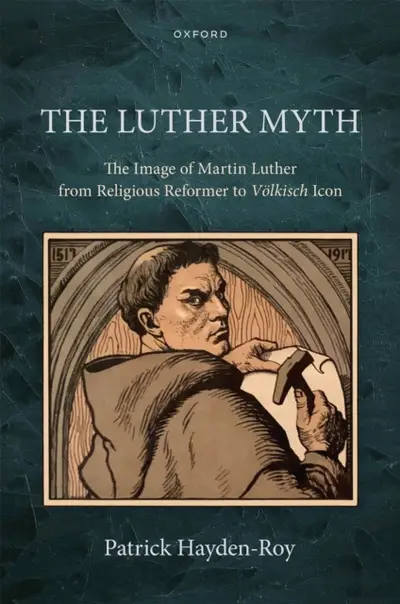
PDF · English
Luther Myth
The Image of Martin Luther from Religious Reformer to VA lkisch Icon
Price and availability
$100.99
Available in: Andorra, Austria, Australia, Belgium, Bulgaria, Canada, Switzerland, Cyprus, Czechia, Germany, Denmark, Estonia, Spain, Finland, France, United Kingdom, Guernsey, Greece, Croatia, Hungary, Ireland, Isle of Man, Iceland, Italy, Jersey, Japan, Liechtenstein, Lithuania, Luxembourg, Latvia, Monaco, Malta, Netherlands, Norway, Poland, Portugal, Romania, Sweden, Slovenia, Slovakia, San Marino, United States, Vatican City, South Africa
Stores: US, UK, Canada, EU, Australia.
Sign in to buyThe price is re-checked by the server before payment.
For personal use under the eBook licence.
- Format
- DRM
- Not stated by the publisher
- Language
- English
- Publisher
- Oxford University Press
- Published
- 13 November 2024
- ISBN
- 9780198930273
- Subjects
- European history, Modern history to 20th century: c 1700 to c 1900, 20th century history: c 1900 to c 2000, Social & cultural history, Protestantism & Protestant Churches, European history, Social and cultural history, Protestantism and Protestant Churches
About this book
In the period from the close of the Napoleonic Wars up through the immediate post-World-War II era the image of Martin Luther was transposed in Germany from a religious reformer and advocate of freedom to a symbol of vA lkisch nationalist identity, such that with the seizure of power by the Nazis, Luther was used to portray a symbiosis between the new regime and the tradition of Protestant religiosity. The Luther Myth traces the evolution of this image within the environment of nineteenth- and twentieth-century German nationalist sentiment, looking particularly at how Protestant Germans styled Luther to affirm the essentialist racial identity politics of the Nazis, the cult of authoritarian leadership around Adolf Hitler, the drive to impose state control over all competing sources of authority, and the victimizing of German Jews. In doing so, it sheds new light on why Nazism was able to co-opt German Protestantism as a source for legitimizing its seizure of power despite the fact that the animating core of Nazi ideology was radically subversive in relation to traditional Christian piety. Using evidence drawn from not only theological works and literary and philosophical sources, but also speeches, theatrical works, public celebrations, and monuments, it pulls together the narrative of development and connects it over the longer term, offering an original contribution to scholarship on the topic and allowing readers a format for considering how similar dynamics are still at work in contemporary society and culture.
Bibliographic data © Gardners Books Ltd.