PDF · English
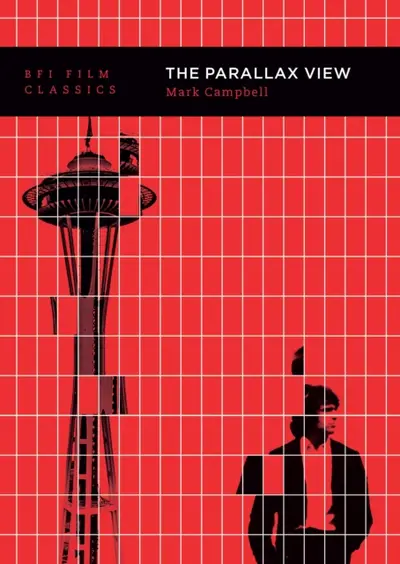
Parallax View
Price and availability
$15.99
Available in: Andorra, Austria, Australia, Belgium, Bulgaria, Canada, Switzerland, Cyprus, Czechia, Germany, Denmark, Estonia, Spain, Finland, France, United Kingdom, Guernsey, Greece, Croatia, Hungary, Ireland, Isle of Man, Iceland, Italy, Jersey, Japan, Liechtenstein, Lithuania, Luxembourg, Latvia, Monaco, Malta, Netherlands, Norway, Poland, Portugal, Romania, Sweden, Slovenia, Slovakia, San Marino, United States, Vatican City, South Africa
Stores: US, UK, Canada, EU, Australia.
Sign in to buyThe price is re-checked by the server before payment.
For personal use under the eBook licence.
- Format
- DRM
- Not stated by the publisher
- Language
- English
- Publisher
- Bloomsbury Publishing
- Published
- 14 November 2024
- Pages
- 104
- ISBN
- 9781839026324
- Subjects
- Film theory & criticism, Conspiracy theories, ATFA, JBGX
About this book
Alan J. Pakula's The Parallax View (1974) is a renowned example of the paranoid conspiracy thriller, a genre that was a marker of the 1970s. The period was haunted by the murders of John F Kennedy (1963), Malcolm X (1965), Martin Luther King (1968), and Robert Kennedy (1968), together with the crimes of the Manson family, Altamont, the Vietnam War, and the Watergate scandal. Mark Campbell's study of the film situates it within this historical moment of increasing paranoia and conspiracy, analyzing the ways in which it not only reflected, but also actively constructed, this febrile worldview. He contextualizes the film as an adaptation of Loren Singer's 1970 pulp novel by the same name, and highlights the role of influential cinematographer, Gordon Willis, in constructing the visual style that was essential to the filmic representation of paranoia. Focusing on the film itself, Campbell provides a detailed analysis of key scenes, particularly the central six-minute brainwashing sequence which featured imagery drawn from pop culture, advertising slogans, and violent imagery. He examines Pakula's use of the film-within-a-film visual trope, and how the scene refers to the then widely-held suspicion that television and mass media were tools of psychological conditioning , highlighting how this concern was reflective of new anxieties about corporate and media power.
Bibliographic data © Gardners Books Ltd.