PDF · English
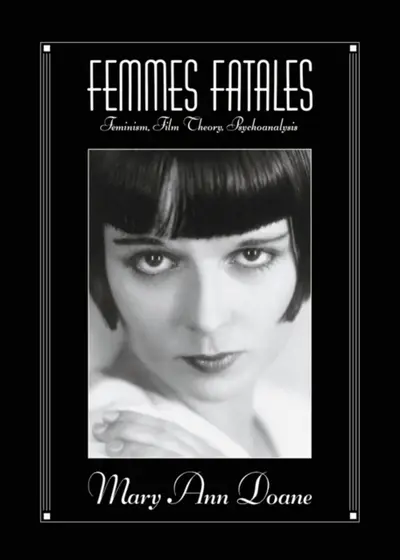
Femmes Fatales
Price and availability
$58.99
Available in: Andorra, Austria, Australia, Belgium, Bulgaria, Canada, Switzerland, Cyprus, Czechia, Germany, Denmark, Estonia, Spain, Finland, France, United Kingdom, Guernsey, Greece, Croatia, Hungary, Ireland, Isle of Man, Iceland, Italy, Jersey, Japan, Liechtenstein, Lithuania, Luxembourg, Latvia, Monaco, Malta, Netherlands, Norway, Poland, Portugal, Romania, Sweden, Slovenia, Slovakia, San Marino, United States, Vatican City, South Africa
Stores: US, UK, Canada, EU, Australia.
Sign in to buyThe price is re-checked by the server before payment.
For personal use under the eBook licence.
- Format
- DRM
- Not stated by the publisher
- Language
- English
- Publisher
- Taylor & Francis
- Published
- 17 June 2013
- ISBN
- 9781136638978
- Subjects
- Film theory & criticism, Communication studies, Media studies, Feminism & feminist theory, Film history, theory or criticism, Feminism and feminist theory, Psychoanalytical and Freudian psychology
About this book
In this work of feminist film criticism, Mary Ann Doane examines questions of sexual difference and knowledge in cinematic, theoretical, and psychoanalytic discourses. "e;Femmes Fatales"e; examines Freud, the female spectator, the meaning of the close-up, and the nature of stardom. Doane's analyses of such figures as Pabst's Lulu and Rita Hayworth's Gilda trace the thematics and mechanics of maskes, masquerade, and veiling, with specific attention to the form and technology of the cinema. Working through and against the intellectual frameworks of post-structuralist and psychoanalytic theory, Doane interrogates cinematic and theoretical claims to truth about women which rely on judgements about vision and its stability or instability. Reflecting the shift in conceptual priorities within feminist film theory over the last decade, "e;Femmes Fatales"e; addresses debates over female spectatorhsip, essentialism and anti-essentialism, the tensions between psychoanalysis and history, and the relations between racial and sexual difference. Doane's nuanced and original readings of the "e;femme fatale"e; in cinema illustrate confrontations between feminism, film theory and psychoanalysis. This book should be of interest to students and lecturers in women's studies, communications studies and film theory.
Bibliographic data © Gardners Books Ltd.