EPUB · English
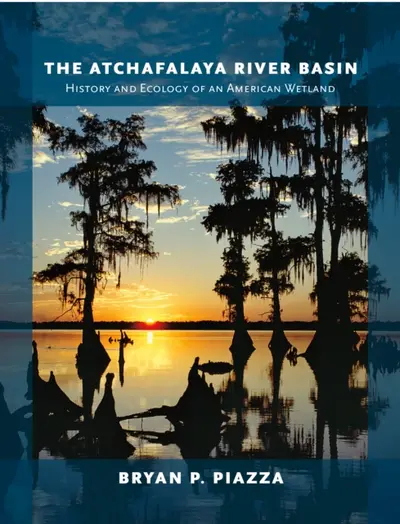
Atchafalaya River Basin
History and Ecology of an American Wetland
Price and availability
$33.99
Available in: Andorra, Austria, Australia, Belgium, Bulgaria, Canada, Switzerland, Cyprus, Czechia, Germany, Denmark, Estonia, Spain, Finland, France, United Kingdom, Guernsey, Greece, Croatia, Hungary, Ireland, Isle of Man, Iceland, Italy, Jersey, Japan, Liechtenstein, Lithuania, Luxembourg, Latvia, Monaco, Malta, Netherlands, Norway, Poland, Portugal, Romania, Sweden, Slovenia, Slovakia, San Marino, United States, Vatican City, South Africa
Stores: US, UK, Canada, EU, Australia.
Sign in to buyThe price is re-checked by the server before payment.
For personal use under the eBook licence.
- Format
- EPUB
- DRM
- Not stated by the publisher
- Language
- English
- Publisher
- Texas A&M University Press
- Published
- 1 March 2014
- ISBN
- 9781623491413
- Subjects
- Limnology (freshwater), Natural history, Limnology (inland waters), Nature and the natural world: general interest
About this book
In this comprehensive, one-volume reference, Nature Conservancy scientist Bryan P. Piazza poses five key questions:-What is the Atchafalaya River Basin?-Why is it important?-How have its hydrology and natural habitats been managed?-What is its current state?-How do we ensure its survival?For more than five centuries, the Atchafalaya River Basin has captured the flow of the Mississippi River, becoming its main distributary as it reaches the Gulf of Mexico in south Louisiana. This dynamic environment, comprising almost a million acres of the lower Mississippi Alluvial Valley and Mississippi River Deltaic Plain, is perhaps best known for its expansive swamp environments dominated by baldcypress, water tupelo, and alligators. But the Atchafalaya River Basin contains a wide range of habitats and one of the highest levels of biodiversity on the North American continent. Piazza has compiled and synthesized the body of scientific knowledge for the Atchafalaya River Basin, documenting the ecological state of the basin and providing a baseline of understanding. His research provides a crucial resource for future planning. He evaluates some common themes that have emerged from the research and identifies important scientific questions that remain unexplored.
Bibliographic data © Gardners Books Ltd.