PDF · English
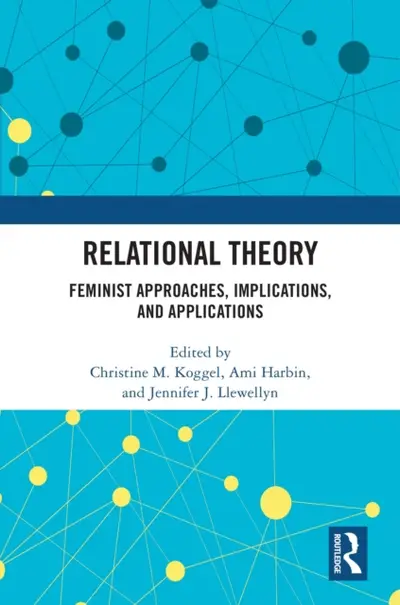
Relational Theory
Feminist Approaches, Implications, and Applications
Price and availability
$79.99
Available in: Andorra, Austria, Australia, Belgium, Bulgaria, Canada, Switzerland, Cyprus, Czechia, Germany, Denmark, Estonia, Spain, Finland, France, United Kingdom, Guernsey, Greece, Croatia, Hungary, Ireland, Isle of Man, Iceland, Italy, Jersey, Japan, Liechtenstein, Lithuania, Luxembourg, Latvia, Monaco, Malta, Netherlands, Norway, Poland, Portugal, Romania, Sweden, Slovenia, Slovakia, San Marino, United States, Vatican City, South Africa
Stores: US, UK, Canada, EU, Australia.
Sign in to buyThe price is re-checked by the server before payment.
For personal use under the eBook licence.
- Format
- DRM
- Not stated by the publisher
- Language
- English
- Publisher
- Taylor & Francis
- Published
- 18 April 2025
- ISBN
- 9781040347515
- Subjects
- Philosophy, Ethics & moral philosophy, Cultural studies, Gender studies, gender groups, Crime & criminology, Political science and theory, Philosophy: epistemology and theory of knowledge, Ethics and moral philosophy
About this book
Relational theory starts from the ontological fact of our being in networks of relationships and draws out what this means for theories of knowledge and for moral and political theory. This book uses insights from feminist relational theory to outline the ontological, epistemological, and moral/political implications of this theoretical approach.The chapters in this volume focus on relationships of power and oppression; how these relationships shape who is taken to have knowledge and who is dismissed or ignored; and what all of this means for theories of equality, justice, and moral and political theory more generally. A focus on relationships of power and oppression opens up an examination into structures such as colonialism and capitalism that shape interconnected networks of relationships between humans and human and non-human entities and ecosystems.This volume, which now includes eight additional chapters published both before and after the original special issue, offers a significant step forward in the development of feminist relational theory. Following early forays in identifying and criticizing mainstream liberal theory in the Western tradition, chapters in this collection draw on approaches by anti-oppression theorists found in critical disability, critical race, anti-colonial/decolonial, and non-Western theories to further broaden the descriptions and analyses of relationships and networks of relationships and to extend and advance feminist relational theory and its applications. The chapters in this book were originally published in the Journal ofGlobal Ethics.
Bibliographic data © Gardners Books Ltd.