PDF · English
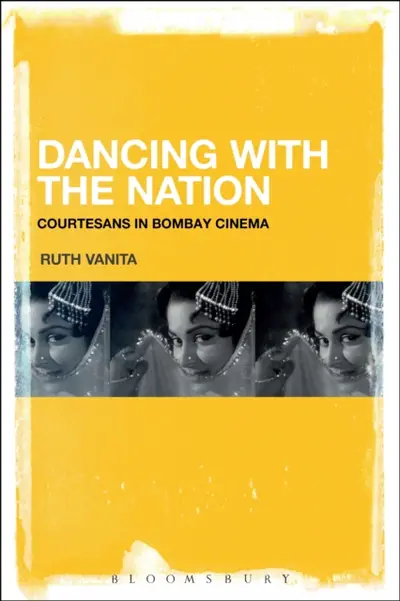
Dancing with the Nation
Courtesans in Bombay Cinema
Price and availability
$42.99
Available in: Andorra, Austria, Australia, Belgium, Bulgaria, Canada, Switzerland, Cyprus, Czechia, Germany, Denmark, Estonia, Spain, Finland, France, United Kingdom, Guernsey, Greece, Croatia, Hungary, Ireland, Isle of Man, Iceland, Italy, Jersey, Japan, Liechtenstein, Lithuania, Luxembourg, Latvia, Monaco, Malta, Netherlands, Norway, Poland, Portugal, Romania, Sweden, Slovenia, Slovakia, San Marino, United States, Vatican City, South Africa
Stores: US, UK, Canada, EU, Australia.
Sign in to buyThe price is re-checked by the server before payment.
For personal use under the eBook licence.
- Format
- DRM
- Not stated by the publisher
- Language
- English
- Publisher
- Bloomsbury Publishing (USA)
- Published
- 22 February 2018
- Pages
- 232
- ISBN
- 9781501334443
- Subjects
- Asia, Indian sub-continent, India, Electronic, holographic & video art, Films, cinema, Film theory & criticism, Media, information & communication industries, Cinema industry, Digital, video and new media arts, ATF, ATFA, Media, entertainment, information and communication industries, Film, TV and Radio industries
About this book
Indian cinema is the only body of world cinema that depicts courtesans as important characters. In early films courtesan characters transmitted Indian classical dance, music and aesthetics to large audiences. They represent the nation's past, tracing their heritage to the fourth-century Kamasutra and to nineteenth-century courtly cultures, but they are also the first group of modern women in Hindi films. They are working professionals living on their own or in matrilineal families. Like male protagonists, they travel widely and develop networks of friends and chosen kin. They have relations with men outside marriage and become single mothers. Courtesan films are heroine-oriented and almost every major female actor has played this role. Challenging received wisdom, Vanita demonstrates that a larger number of courtesans in Bombay cinema are Hindu and indeterminate than are Muslim, and that films depict their culture as hybrid Hindu-Muslim, not Islamicate. Courtesans speak in the ambiguous voice of the modern nation, inviting spectators to seize pleasure here and now but also to search for the meaning of life. Vanita's groundbreaking study of courtesans and courtesan imagery in 235 films brings fresh evidence to show that the courtesan figure shapes the modern Indian erotic, political and religious imagination.
Bibliographic data © Gardners Books Ltd.