EPUB · English
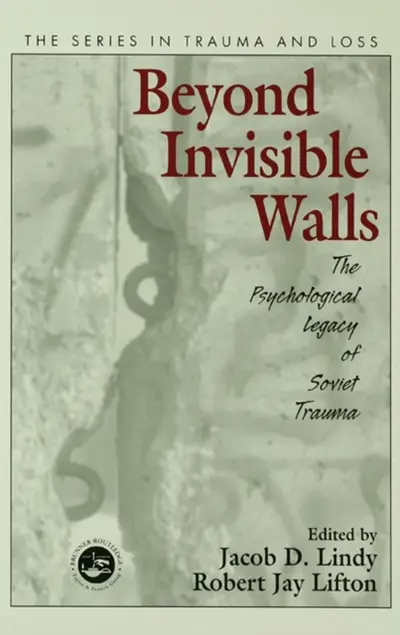
Beyond Invisible Walls
The Psychological Legacy of Soviet Trauma, East European Therapists and Their Patients
Price and availability
$71.99
Available in: Andorra, Austria, Australia, Belgium, Bulgaria, Canada, Switzerland, Cyprus, Czechia, Germany, Denmark, Estonia, Spain, Finland, France, United Kingdom, Guernsey, Greece, Croatia, Hungary, Ireland, Isle of Man, Iceland, Italy, Jersey, Japan, Liechtenstein, Lithuania, Luxembourg, Latvia, Monaco, Malta, Netherlands, Norway, Poland, Portugal, Romania, Sweden, Slovenia, Slovakia, San Marino, United States, Vatican City, South Africa
Stores: US, UK, Canada, EU, Australia.
Sign in to buyThe price is re-checked by the server before payment.
For personal use under the eBook licence.
- Format
- EPUB
- DRM
- Not stated by the publisher
- Language
- English
- Publisher
- Taylor & Francis
- Published
- 13 May 2013
- ISBN
- 9781134946334
- Subjects
- Former Soviet Union, USSR (Europe), European history, 20th century history: c 1900 to c 2000, Psychology, Social, group or collective psychology, Clinical psychology, Psychotherapy, Eastern Europe, Abnormal psychology, Psychotherapy
About this book
When the Berlin Wall fell in 1989, Westerners watched those who had survived the era of Soviet trauma emerge into what we hoped would be the exhilarating light of freedom. What we have witnessed, however, is a slow and painful process of progression and regression, of hope and disillusionment, of unexpected psychological barriers: invisible walls that block the progress we had hoped for. In Beyond Invisible Walls, East European therapists, themselves, draw a compelling picture of the waves of trauma that their people endured, the institutions of trauma that remained well after Stalin's era, and their impact on survivors and their families. They describe the psychological remnants of those years: walls that confine people by unconsciously preserving old adaptations to political terror, walls that divide one part of the mind from another, and walls that rise between one generation and the next. These therapists' stories allow us a striking glimpse into how patients' trauma evokes the therapists' own wounds; how both speaker and empathic listener find their way to a healing process, how the two begin to dismantle these invisible walls.
Bibliographic data © Gardners Books Ltd.