EPUB · English
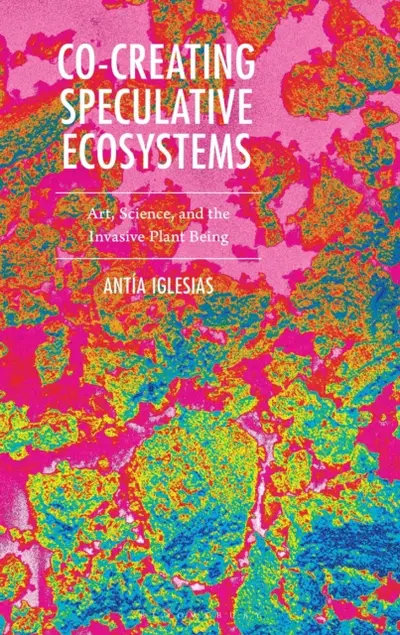
Co-Creating Speculative Ecosystems
Art, Science, and the Invasive Plant Being
Price and availability
$97.99
Not available to buy yet.
Available in: Andorra, Austria, Australia, Belgium, Bulgaria, Canada, Switzerland, Cyprus, Czechia, Germany, Denmark, Estonia, Spain, Finland, France, United Kingdom, Guernsey, Greece, Croatia, Hungary, Ireland, Isle of Man, Iceland, Italy, Jersey, Japan, Liechtenstein, Lithuania, Luxembourg, Latvia, Monaco, Malta, Netherlands, Norway, Poland, Portugal, Romania, Sweden, Slovenia, Slovakia, San Marino, United States, Vatican City, South Africa
Stores: US, UK, Canada, EU, Australia.
This title cannot be bought in this store yet: its supplier terms, territorial rights or price are still being confirmed.
For personal use under the eBook licence.
- Format
- EPUB
- DRM
- Not stated by the publisher
- Language
- English
- Publisher
- Bloomsbury Publishing (USA)
- Published
- 10 December 2026
- Pages
- 234
- ISBN
- 9798216351573
- Subjects
- Botany & plant sciences, Environmentalist thought & ideology, Conservation of the environment, Social impact of environmental issues, Botany and plant sciences, Environmentalist thought and ideology, Conservation of the environment, Social impact of environmental issues
About this book
Focusing on four plant species in the riparian landscapes of Galicia (Northern Spain), this book examines the ecological, conceptual, artistic, and material reality of exotic-invasive plants and the traces they leave behind after land management processes. Rather than treating these individuals as problems, this research approaches them as collaborators. Through artistic practice and scientific experimentation, vegetal biomass is transformed into new materials -pigments, paper -and artworks, opening unexpected paths for creation and reflection. Blending theory with practice, this book brings together art experiences, ecological thinking, environmental humanities, and experimental processes to question the boundaries between disciplines, nature and culture, and human and non-human agency. Finally, the author proposes that art and science, working together, can help us perceive the complexity of ecosystems and rethink our role within them.
Bibliographic data © Gardners Books Ltd.