PDF · English
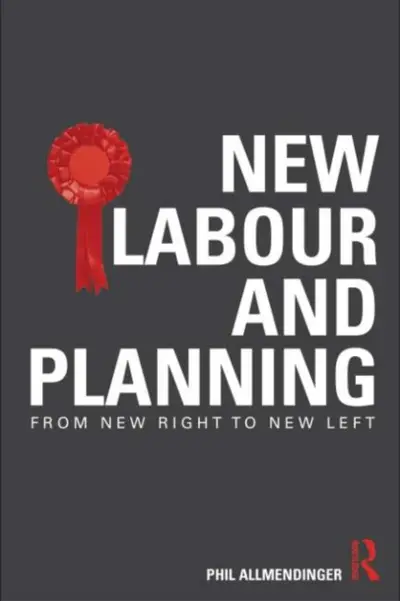
New Labour and Planning
From New Right to New Left
Price and availability
$50.99
Available in: Andorra, Austria, Australia, Belgium, Bulgaria, Canada, Switzerland, Cyprus, Czechia, Germany, Denmark, Estonia, Spain, Finland, France, United Kingdom, Guernsey, Greece, Croatia, Hungary, Ireland, Isle of Man, Iceland, Italy, Jersey, Japan, Liechtenstein, Lithuania, Luxembourg, Latvia, Monaco, Malta, Netherlands, Norway, Poland, Portugal, Romania, Sweden, Slovenia, Slovakia, San Marino, United States, Vatican City, South Africa
Stores: US, UK, Canada, EU, Australia.
Sign in to buyThe price is re-checked by the server before payment.
For personal use under the eBook licence.
- Format
- DRM
- Not stated by the publisher
- Language
- English
- Publisher
- Taylor & Francis
- Published
- 17 January 2011
- ISBN
- 9781136833212
- Subjects
- United Kingdom, Great Britain, City & town planning - architectural aspects, Politics & government, Urban & municipal planning, Civil engineering, surveying & building, United Kingdom, Great Britain, Public administration / Public policy, Climate change, Urban and municipal planning and policy
About this book
Following the Thatcher and Major administrations there was an apparent renaissance of planning under New Labour. After a slow start in which Labour's view of planning owed more to a neo-liberal, rolled back state model reminiscent of the New Right the Government began to appreciate that many of its wider objectives including economic development, climate change, democratic renewal, social justice and housing affordability intersected with and were critically dependent upon the planning system. A wide range of initiatives, management processes, governance vehicles and policy documents emanated from Government. Planning, like other areas of the public sector, was to be reformed and modernised as well as given a prime role in tackling national, high profile priorities such as increasing housing supply and improving economic competitiveness. Drawing upon an institutionalist framework the book also seeks to understand how and in what circumstances change emerges, either in an evolutionary or punctuated way. It will, for the first time, chart and explore the changing nature of development and planning over the Labour era whilst also stepping back and reflecting upon what such changes mean for planning generally and the likely future trajectories of reform and spatial governance.
Bibliographic data © Gardners Books Ltd.