PDF · English
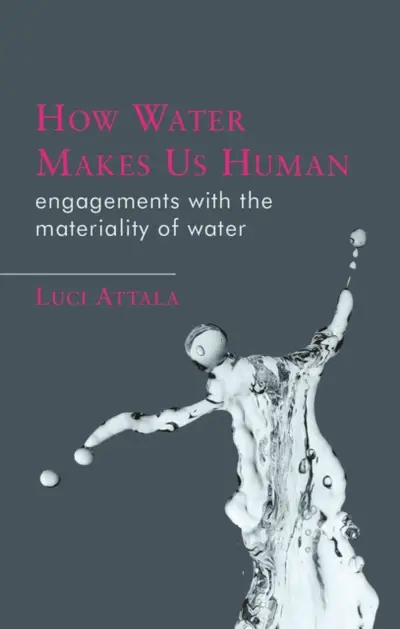
How Water Makes Us Human
Engagements with the Materiality of Water
Price and availability
$28.99
Available in: Andorra, Austria, Australia, Belgium, Bulgaria, Canada, Switzerland, Cyprus, Czechia, Germany, Denmark, Estonia, Spain, Finland, France, United Kingdom, Guernsey, Greece, Croatia, Hungary, Ireland, Isle of Man, Iceland, Italy, Jersey, Japan, Liechtenstein, Lithuania, Luxembourg, Latvia, Monaco, Malta, Netherlands, Norway, Poland, Portugal, Romania, Sweden, Slovenia, Slovakia, San Marino, United States, Vatican City, South Africa
Stores: US, UK, Canada, EU, Australia.
Sign in to buyThe price is re-checked by the server before payment.
For personal use under the eBook licence.
- Format
- DRM
- Not stated by the publisher
- Language
- English
- Publisher
- University of Wales Press
- Published
- 1 April 2019
- ISBN
- 9781786834126
- Subjects
- Philosophy, Material culture, Anthropology, Social and cultural anthropology
About this book
This book is about how water becomes people - or, put another way, how people and water flow together and shape each other. While the focus of the book is on the relationships held between water and people, it also has a broader message about human relationships with the environment generally - a message that illustrates not only that people are existentially entangled with the material world, but that the materials of the world shape, determine and enable humans to be 'humans' in the ways that they are. Offering a selection of anthropological examples from Kenya, Wales and Spain to illustrate how water's materiality coproductively generates the way people are able to engage with water, this book uses cross-disciplinary perspectives to provide and promote a new analytic - one that encourages ethical, holistic and sustainable relationships with the world around us. This approach challenges representations that ignore, sidestep or are blind to the fleshy materiality of being human, and aims to encourage a re-imagining of the world that acknowledges humanity as intrinsically active-with and part of the fabric of the collection of materials we call planet Earth.
Bibliographic data © Gardners Books Ltd.