EPUB · English
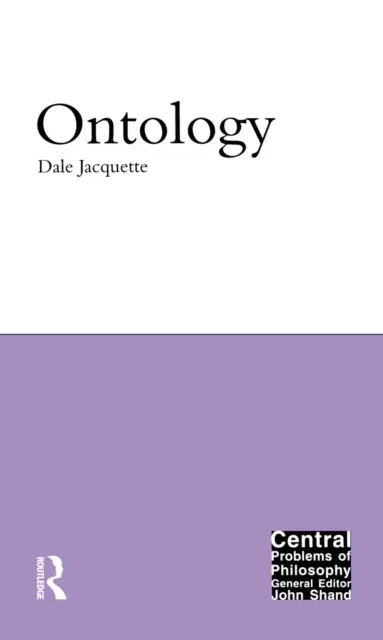
Ontology
Price and availability
$59.99
Available in: Andorra, Austria, Australia, Belgium, Bulgaria, Canada, Switzerland, Cyprus, Czechia, Germany, Denmark, Estonia, Spain, Finland, France, United Kingdom, Guernsey, Greece, Croatia, Hungary, Ireland, Isle of Man, Iceland, Italy, Jersey, Japan, Liechtenstein, Lithuania, Luxembourg, Latvia, Monaco, Malta, Netherlands, Norway, Poland, Portugal, Romania, Sweden, Slovenia, Slovakia, San Marino, United States, Vatican City, South Africa
Stores: US, UK, Canada, EU, Australia.
Sign in to buyThe price is re-checked by the server before payment.
For personal use under the eBook licence.
- Format
- EPUB
- DRM
- Not stated by the publisher
- Language
- English
- Publisher
- Taylor & Francis
- Published
- 18 December 2014
- ISBN
- 9781317489580
- Subjects
- Philosophy: metaphysics & ontology, Philosophy of mind, Philosophy: metaphysics and ontology, Philosophy of mind
About this book
The philosophical study of what exists and what it means for something to exist is one of the core concerns of metaphysics. This introduction to ontology provides readers with a comprehensive account of the central ideas of the subject of being. This book is divided into two parts. The first part explores questions of pure philosophical ontology: what is meant by the concept of being, why there exists something rather than nothing, and why there is only one logically contingent actual world. Dale Jacquette shows how logic provides the only possible answers to these fundamental problems. The second part of the book examines issues of applied scientific ontology. Jacquette offers a critical survey of some of the most influential traditional ontologies, such as the distinction between appearance and reality, and the categories of substance and transcendence. The ontology of physical entities - space, time, matter and causation - is examined as well as the ontology of abstract entities such as sets, numbers, properties, relations and propositions. The special problems posed by the subjectivity of mind and of postulating a god are also explored in detail. The final chapter examines the ontology of culture, language and art.
Bibliographic data © Gardners Books Ltd.