EPUB · English
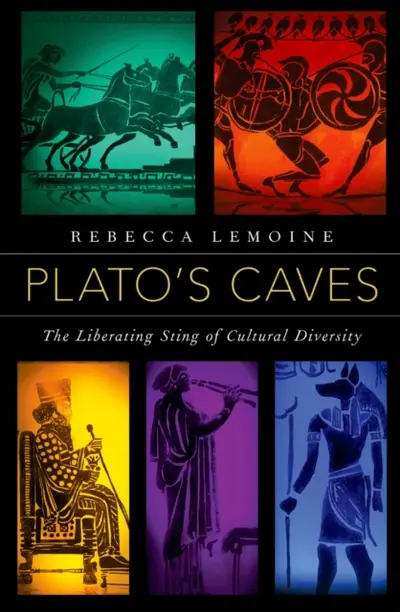
Plato's Caves
The Liberating Sting of Cultural Diversity
Price and availability
$33.99
Available in: Andorra, Austria, Australia, Belgium, Bulgaria, Canada, Switzerland, Cyprus, Czechia, Germany, Denmark, Estonia, Spain, Finland, France, United Kingdom, Guernsey, Greece, Croatia, Hungary, Ireland, Isle of Man, Iceland, Italy, Jersey, Japan, Liechtenstein, Lithuania, Luxembourg, Latvia, Monaco, Malta, Netherlands, Norway, Poland, Portugal, Romania, Sweden, Slovenia, Slovakia, San Marino, United States, Vatican City, South Africa
Stores: US, UK, Canada, EU, Australia.
Sign in to buyThe price is re-checked by the server before payment.
For personal use under the eBook licence.
- Format
- EPUB
- DRM
- Not stated by the publisher
- Language
- English
- Publisher
- Oxford University Press
- Published
- 26 December 2019
- ISBN
- 9780190937003
- Subjects
- Classical texts, Ancient history: to c 500 CE, Social & political philosophy, Political science & theory, Nationalism, Ancient, classical and medieval texts, Political science and theory, Nationalism and nationalist ideologies and movements, NHC, QDTS
About this book
Classical antiquity has become a political battleground in recent years in debates over immigration and cultural identity-whether it is ancient sculpture, symbolism, or even philosophy. Caught in the crossfire is the legacy of the famed ancient Greek philosopher Plato. Though works such as Plato's Republic have long been considered essential reading for college students, protestors on campuses around the world are calling for the removal of Plato's dialogues from the curriculum, contending that Plato and other thinkers in the Western philosophical tradition promote xenophobic and exclusionary ideologies. The appropriation of the classics by white nationalists throughout history--from the Nazis to modern-day hate groups--appears to lend credence to this claim, and the traditional scholarly narrative of cultural diversity in classical Greek political thought often reinforces the perception of ancient thinkers as xenophobic. This is particularly the case with interpretations of Plato. While scholars who study Plato reject the wholesale dismissal of his work, the vast majority tend to admit that his portrayal of foreigners is unsettling. From student protests over the teaching of canonical texts such as Plato's Republic to the use of images of classical Greek statues in white supremacist propaganda, the world of the ancient Greeks is deeply implicated in a heated contemporary debate about identity and diversity. Plato's Caves defends the bold thesis that Plato was a friend of cultural diversity, contrary to many contemporary perceptions. It shows that, across Plato's dialogues, foreigners play a role similar to that of Socrates: liberating citizens from intellectual bondage. Through close readings of four Platonic dialogues--Republic, Menexenus, Laws, and Phaedrus--Rebecca LeMoine recovers Plato's unique insight into the promise, and risk, of cross-cultural engagement. Like the Socratic "e;gadfly"e; who stings the "e;horse"e; of Athens into wakefulness, foreigners can provoke citizens to self-reflection by exposing contradictions and confronting them with alternative ways of life. The painfulness of this experience explains why encounters with foreigners often give rise to tension and conflict. Yet it also reveals why cultural diversity is an essential good. Simply put, exposure to cultural diversity helps one develop the intellectual humility one needs to be a good citizen and global neighbor. By illuminating Plato's epistemological argument for cultural diversity, Plato's Caves challenges readers to examine themselves and to reinvigorate their love of learning.
Bibliographic data © Gardners Books Ltd.