PDF · English
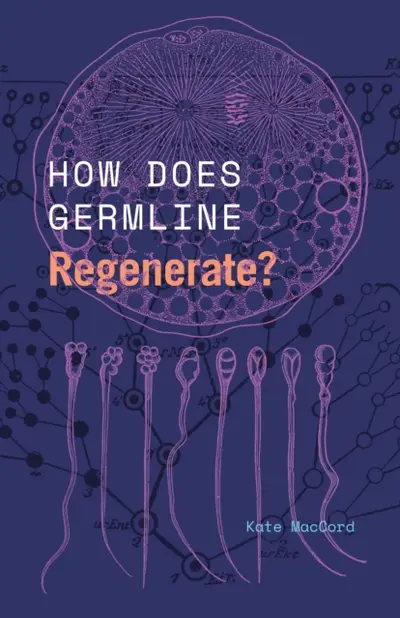
How Does Germline Regenerate?
Price and availability
$35.99
Available in: Andorra, Austria, Australia, Belgium, Bulgaria, Canada, Switzerland, Cyprus, Czechia, Germany, Denmark, Estonia, Spain, Finland, France, United Kingdom, Guernsey, Greece, Croatia, Hungary, Ireland, Isle of Man, Iceland, Italy, Jersey, Japan, Liechtenstein, Lithuania, Luxembourg, Latvia, Monaco, Malta, Netherlands, Norway, Poland, Portugal, Romania, Sweden, Slovenia, Slovakia, San Marino, United States, Vatican City, South Africa
Stores: US, UK, Canada, EU, Australia.
Sign in to buyThe price is re-checked by the server before payment.
For personal use under the eBook licence.
- Format
- DRM
- Not stated by the publisher
- Language
- English
- Publisher
- University of Chicago Press
- Published
- 9 January 2024
- ISBN
- 9780226830506
- Subjects
- Science: general issues, Philosophy of science, Cellular biology (cytology), Science: general issues, Impact of science and technology on society, Cellular biology (cytology)
About this book
A concise primer that complicates a convenient truth in biology-the divide between germ and somatic cells-with far-reaching ethical and public policy ramifications. Scientists have long held that we have two kinds of cells-germ and soma. Make a change to germ cells-say using genome editing-and that change will appear in the cells of future generations. Somatic cells are "e;safe"e; after such tampering; modify your skin cells, and your future children's skin cells will never know. And, while germ cells can give rise to new generations (including all of the somatic cells in a body), somatic cells can never become germ cells. How did scientists discover this relationship and distinction between somatic and germ cells-the so-called Weismann Barrier-and does it actually exist? Can somatic cells become germ cells in the way germ cells become somatic cells? That is, can germ cells regenerate from somatic cells even though conventional wisdom denies this possibility? Covering research from the late nineteenth century to the 2020s, historian and philosopher of science Kate MacCord explores how scientists came to understand and accept the dubious concept of the Weismann Barrier and what profound implications this convenient assumption has for research and policy, from genome editing to stem cell research, and much more.
Bibliographic data © Gardners Books Ltd.