PDF · English
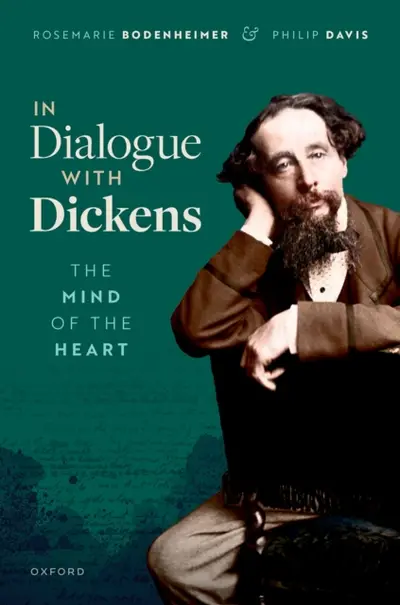
In Dialogue with Dickens
The Mind of the Heart
Price and availability
$33.99
Available in: Andorra, Austria, Australia, Belgium, Bulgaria, Canada, Switzerland, Cyprus, Czechia, Germany, Denmark, Estonia, Spain, Finland, France, United Kingdom, Guernsey, Greece, Croatia, Hungary, Ireland, Isle of Man, Iceland, Italy, Jersey, Japan, Liechtenstein, Lithuania, Luxembourg, Latvia, Monaco, Malta, Netherlands, Norway, Poland, Portugal, Romania, Sweden, Slovenia, Slovakia, San Marino, United States, Vatican City, South Africa
Stores: US, UK, Canada, EU, Australia.
Sign in to buyThe price is re-checked by the server before payment.
For personal use under the eBook licence.
- Format
- DRM
- Not stated by the publisher
- Language
- English
- Publisher
- Oxford University Press
- Published
- 5 April 2024
- ISBN
- 9780192886750
- Subjects
- Literary studies: c 1800 to c 1900, Literary studies: fiction, novelists & prose writers, The self, ego, identity, personality, Literary studies: c 1800 to c 1900, Literary studies: fiction, novelists and prose writers, Psychology: the self, ego, identity, personality
About this book
Written in the form of a back-and-forth dialogue between the two authors, this book is about the relationship between feeling and thinking in Dickens's novels. It presents Dickens as a psychological thinker, whose generative thought may be conscious, unconscious, half-conscious, or in transit between one state and another. This Dickens is always in live process, improvizing from one monthly number to the next, subtly revizing as he goes, shifting moods, tenses, and tones from one paragraph or sentence to the next, as what he writes sparks off what he suddenly, newly, thinks. The chapters approach this inquiry through close readings of chosen passages, including studies of telling revisions in Dickens's manuscripts that reveal the power of his deepened second thoughts. They also draw on selected moments from his personal letters and prefaces when these more casual writings prove to be sketches or rehearsals for thoughts and feelings that achieve new life when they are transformed into fiction. The book concentrates on four novels of his great middle period: Dombey and Son, David Copperfield, Bleak House, and Little Dorrit, while making excursions into earlier and later Dickens novels, notably A Tale of Two Cities and Our Mutual Friend. The experiment of intense but informal conversation between the authors also models the relationship between feeling and thinking in the act of reading and responding to powerful moves in fiction.
Bibliographic data © Gardners Books Ltd.