EPUB · English
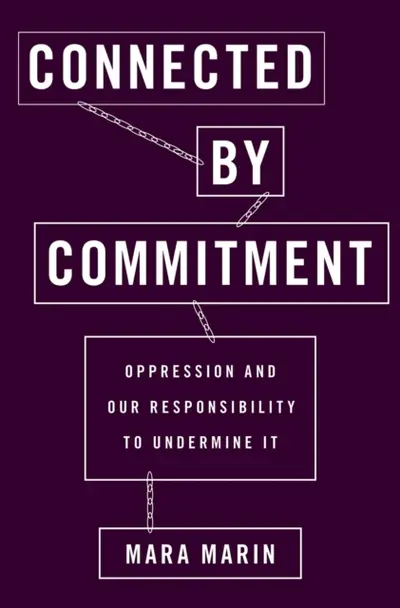
Connected by Commitment
Oppression and Our Responsibility to Undermine It
Price and availability
$40.99
Available in: Andorra, Austria, Australia, Belgium, Bulgaria, Canada, Switzerland, Cyprus, Czechia, Germany, Denmark, Estonia, Spain, Finland, France, United Kingdom, Guernsey, Greece, Croatia, Hungary, Ireland, Isle of Man, Iceland, Italy, Jersey, Japan, Liechtenstein, Lithuania, Luxembourg, Latvia, Monaco, Malta, Netherlands, Norway, Poland, Portugal, Romania, Sweden, Slovenia, Slovakia, San Marino, United States, Vatican City, South Africa
Stores: US, UK, Canada, EU, Australia.
Sign in to buyThe price is re-checked by the server before payment.
For personal use under the eBook licence.
- Format
- EPUB
- DRM
- Not stated by the publisher
- Language
- English
- Publisher
- Oxford University Press
- Published
- 1 September 2017
- ISBN
- 9780190840068
- Subjects
- Political science & theory, Comparative politics, Human rights, Political oppression & persecution, Political science and theory, Comparative politics, Human rights, civil rights, Political oppression and persecution
About this book
Saying that political and social oppression is a deeply unjust and widespread condition of life is not a terribly controversial statement. Likewise, theorists of justice frequently consider our obligation to not turn a blind eye to oppression. But what is our culpability in the endurance of oppression? In this book, Mara Marin complicates the primary ways in which we make sense of human and political relationships and our obligations within them. Rather than thinking of relationships in terms of our intentions, Marin thinks of them as open-ended and subject to ongoing commitments. Commitments create open-ended expectations and vulnerabilities on the part of others, and therefore also obligations. By this rationale, our actions sustain oppressive or productive structures in virtue of their cumulative effects, not the intentions of the actors.When we violate our obligations we oppress others. Over the chapters of her book, Marin applies her model of commitment to caregivers, marriage, and bargaining power between labor and employers, and examines three types of social relations: political-legal relations, intimate relations of care, and work relations. By linking habitual action to obligation, Marin argues that we should see our responsibilities within such relationships as political and as creating norms for behavior over time. Commitment both points to the support our actions give to oppressive structures and to the ways in which our actions can weaken the same structures. Connected by Commitment examines our obligations to transform structures of oppression and offers commitment as a model for solidarity across race, gender, and class.
Bibliographic data © Gardners Books Ltd.