PDF · English
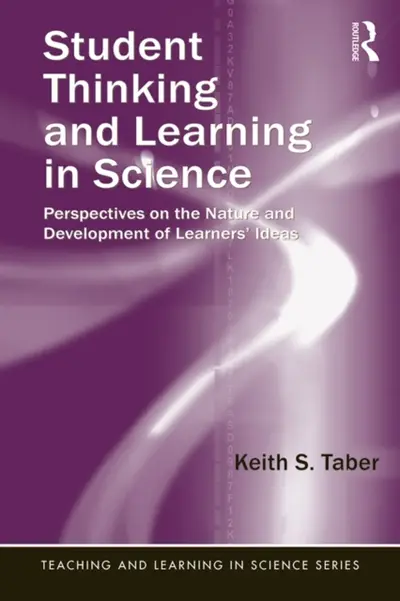
Student Thinking and Learning in Science
Perspectives on the Nature and Development of Learners' Ideas
Price and availability
$74.99
Available in: Andorra, Austria, Australia, Belgium, Bulgaria, Canada, Switzerland, Cyprus, Czechia, Germany, Denmark, Estonia, Spain, Finland, France, United Kingdom, Guernsey, Greece, Croatia, Hungary, Ireland, Isle of Man, Iceland, Italy, Jersey, Japan, Liechtenstein, Lithuania, Luxembourg, Latvia, Monaco, Malta, Netherlands, Norway, Poland, Portugal, Romania, Sweden, Slovenia, Slovakia, San Marino, United States, Vatican City, South Africa
Stores: US, UK, Canada, EU, Australia.
Sign in to buyThe price is re-checked by the server before payment.
For personal use under the eBook licence.
- Format
- DRM
- Not stated by the publisher
- Language
- English
- Publisher
- Taylor & Francis
- Published
- 11 April 2014
- ISBN
- 9781136620850
- Subjects
- Education, Educational psychology, Curriculum planning & development, Secondary schools, Teaching of a specific subject, Educational: Sciences, general science, Secondary schools, Teaching of a specific subject
About this book
This readable and informative survey of key ideas about students' thinking in science builds a bridge between theory and practice by offering clear accounts from research, and showing how they relate to actual examples of students talking about widely taught science topics. Focused on secondary students and drawing on perspectives found in the international research literature, the goal is not to offer a comprehensive account of the vast literature, but rather to provide an overview of the current state of the field suitable for those who need an understanding of core thinking about learners' ideas in science, including science education students in teacher preparation and higher degree programs, and classroom teachers, especially those working with middle school, high school, or college level students. Such understanding can inform and enrich science teaching in ways which are more satisfying for teachers, less confusing and frustrating for learners, and so ultimately can lead to both greater scientific literacy and more positive attitudes to science.
Bibliographic data © Gardners Books Ltd.