PDF · English
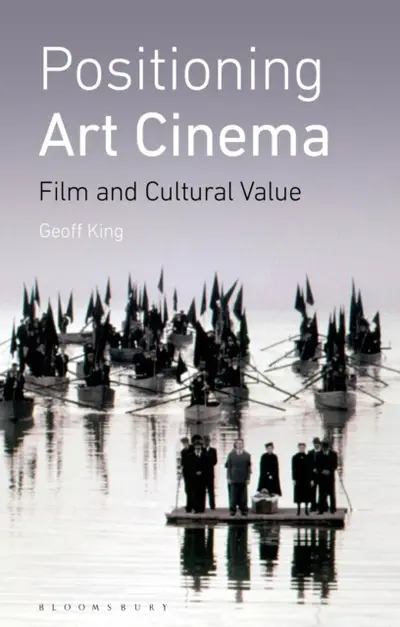
Positioning Art Cinema
Film and Cultural Value
Price and availability
$32.99
Available in: Andorra, Austria, Australia, Belgium, Bulgaria, Canada, Switzerland, Cyprus, Czechia, Germany, Denmark, Estonia, Spain, Finland, France, United Kingdom, Guernsey, Greece, Croatia, Hungary, Ireland, Isle of Man, Iceland, Italy, Jersey, Japan, Liechtenstein, Lithuania, Luxembourg, Latvia, Monaco, Malta, Netherlands, Norway, Poland, Portugal, Romania, Sweden, Slovenia, Slovakia, San Marino, United States, Vatican City, South Africa
Stores: US, UK, Canada, EU, Australia.
Sign in to buyThe price is re-checked by the server before payment.
For personal use under the eBook licence.
- Format
- DRM
- Not stated by the publisher
- Language
- English
- Publisher
- Bloomsbury Publishing
- Published
- 24 January 2019
- Pages
- 344
- ISBN
- 9781786735560
- Subjects
- Film theory & criticism, Cultural studies, Media studies, Media, information & communication industries, Cinema industry, ATFA, JBCC, JBCT, Media, entertainment, information and communication industries, Film, TV and Radio industries
About this book
Art cinema occupies a space in the film landscape that is accorded a particular kind of value. From films that claim the status of harsh realism to others which embody aspects of the tradition of modernism or the poetic, art cinema encompasses a variety of work from across the globe. But how is art cinema positioned in the film marketplace, or by critics and in academic analysis? Exactly what kinds of cultural value are attributed to films of this type and how can this be explained? This book offers a unique analysis of how such processes work, including the broader cultural basis of the appeal of art cinema to particular audiences.Geoff King argues that there is no single definition of art cinema, but a number of distinct and recurrent tendencies are identified. At one end of the spectrum are films accorded the most 'heavyweight' status, offering the greatest challenges to viewers. Others mix aspects of art cinema with more accessible dimensions such as uses of popular genre frameworks and 'exploitation' elements involving explicit sex and violence. Including case studies of key figures such as Michael Haneke, Pedro Almod var and Jean-Pierre and Luc Dardenne, this is a crucial contribution to understanding both art cinema itself and the discourses through which its value is established.
Bibliographic data © Gardners Books Ltd.