EPUB · English
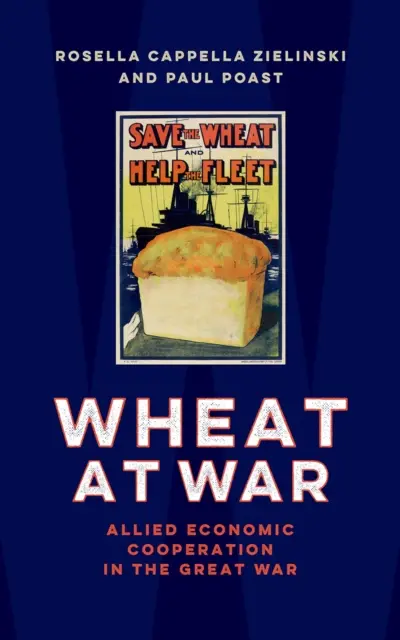
Wheat at War
Allied Economic Cooperation in the Great War
Price and availability
$22.99
Available in: Andorra, Austria, Australia, Belgium, Bulgaria, Canada, Switzerland, Cyprus, Czechia, Germany, Denmark, Estonia, Spain, Finland, France, United Kingdom, Guernsey, Greece, Croatia, Hungary, Ireland, Isle of Man, Iceland, Italy, Jersey, Japan, Liechtenstein, Lithuania, Luxembourg, Latvia, Monaco, Malta, Netherlands, Norway, Poland, Portugal, Romania, Sweden, Slovenia, Slovakia, San Marino, United States, Vatican City, South Africa
Stores: US, UK, Canada, EU, Australia.
Sign in to buyThe price is re-checked by the server before payment.
For personal use under the eBook licence.
- Format
- EPUB
- DRM
- Not stated by the publisher
- Language
- English
- Publisher
- Oxford University Press
- Published
- 1 August 2025
- ISBN
- 9780197812754
- Subjects
- c 1914 to c 1918 (including WW1), 20th century history: c 1900 to c 2000, First World War, Political structure & processes, International relations, Political economy, International business, Food security & supply, 3MPBFB, Political structure and processes, International relations, Political economy, International business, NH, NHWR5, Food security and supply
About this book
The battlefields were not the only places that threatened death during World War I. As conflict raged on and supply lines tightened, the allied powers of France, Britain, and Italy faced a fundamental problem: keeping their soldier and civilian populations safe from starvation. Wheat at War describes how, faced with this immense challenge, the Allies devised a multilateral institution--the Wheat Executive--to do what no state could do alone. Rosella Cappella Zielinski and Paul Poast examine the difficult considerations made by the allied powers when ceding authority to an international body that would make decisions for them. Beyond successfully managing wheat shipping and distribution, they argue, the Wheat Executive proved to have significant influence in the evolving landscape of interstate cooperation. As a case study, the Wheat Executive improves our understanding of international institutional design, the importance of commodities during wartime, economic coordination amongst wartime coalition members, and the legacies of international cooperation during the First World War. As one of the first great experiments in supranationalism, the Allies' management of wheat while at war provides lessons about the emergence of international organizations and their contours.
Bibliographic data © Gardners Books Ltd.