PDF · English
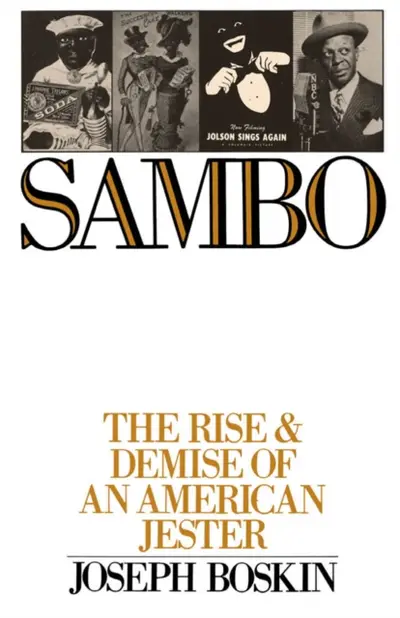
Sambo
The Rise and Demise of an American Jester
Price and availability
$14.99
Available in: Andorra, Austria, Australia, Belgium, Bulgaria, Canada, Switzerland, Cyprus, Czechia, Germany, Denmark, Estonia, Spain, Finland, France, United Kingdom, Guernsey, Greece, Croatia, Hungary, Ireland, Isle of Man, Iceland, Italy, Jersey, Japan, Liechtenstein, Lithuania, Luxembourg, Latvia, Monaco, Malta, Netherlands, Norway, Poland, Portugal, Romania, Sweden, Slovenia, Slovakia, San Marino, United States, Vatican City, South Africa
Stores: US, UK, Canada, EU, Australia.
Sign in to buyThe price is re-checked by the server before payment.
For personal use under the eBook licence.
- Format
- DRM
- Not stated by the publisher
- Language
- English
- Publisher
- Oxford University Press
- Published
- 8 September 1988
- ISBN
- 9780195363531
- Subjects
- USA, Dance & other performing arts, History of the Americas, Ethnic studies, Black & Asian studies, United States of America, USA, ATQ, JBSL, NHK
About this book
Before the tumultuous events of the 1960's ended his long life, "e;Sambo"e; prevailed in American culture as the cheerful and comical entertainer. This stereotypical image of the black male, which developed during the Colonial period, extended into all regions and classes, pervading all levels of popular culture for over two centuries. It stands as an outstanding example of how American society has used humor oppressively. Joseph Boskin's Sambo provides a comprehensive history of this American icon's rise and decline, tracing the image of "e;Sambo"e; in circuses and minstrel shows, in comic strips and novels, in children's stories, in advertisements and illustrations, in films and slides, in magazines and newspapers, and in knick-knacks found throughout the house. He demonstrates how the stereotype began to unravel in the 1930s with several radio series, specifically the Jack Benny show, which undercut and altered the "e;Sambo"e; image. Finally, the democratic thrust of World War II, coupled with the advent of the Civil Rights movement and growing national recognition of prominent black comedians in the 1950's and '60's, laid Sambo to rest.
Bibliographic data © Gardners Books Ltd.