PDF · English
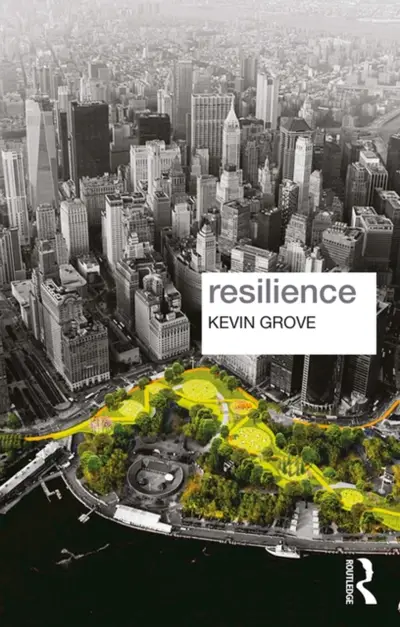
Resilience
Price and availability
$56.99
Available in: Andorra, Austria, Australia, Belgium, Bulgaria, Canada, Switzerland, Cyprus, Czechia, Germany, Denmark, Estonia, Spain, Finland, France, United Kingdom, Guernsey, Greece, Croatia, Hungary, Ireland, Isle of Man, Iceland, Italy, Jersey, Japan, Liechtenstein, Lithuania, Luxembourg, Latvia, Monaco, Malta, Netherlands, Norway, Poland, Portugal, Romania, Sweden, Slovenia, Slovakia, San Marino, United States, Vatican City, South Africa
Stores: US, UK, Canada, EU, Australia.
Sign in to buyThe price is re-checked by the server before payment.
For personal use under the eBook licence.
- Format
- DRM
- Not stated by the publisher
- Language
- English
- Publisher
- Taylor & Francis
- Published
- 17 April 2018
- ISBN
- 9781317340010
- Subjects
- Development studies, Social impact of disasters, Geography, Human geography, Natural disasters, Development and environmental geography, Environmental policy and protocols, Sustainability
About this book
Is resilience simply a fad, or is it a new way of thinking about human-environment relations, and the governance of these relations, that has real staying power? Is resilience a dangerous, depoliticizing concept that neuters incipient political activity, or the key to more empowering, emancipatory, and participatory forms of environmental management? Resilience offers an advanced introduction to these debates. It provides students with a detailed review of how the concept emerged from a small corner of ecology to critically challenge conventional environmental management practices, and radicalize how we can think about and manage social and ecological change. But Resilience also situates this new style of thought and management within a particular historical and geographical context. It traces the roots of resilience to the cybernetically-influenced behavioral science of Herbert Simon, the neoliberal political economic theory of new institutional economics, the pragmatist philosophy of John Dewey, and the modernist design aesthetic of the Bauhaus school. These diverse roots are what distinguish resilience approaches from other ways of studying human-environment relations. Resilience thinking recalibrates the study of social and environmental change around a will to design, a drive or desire to synthesize diverse forms of knowledge and develop collaborative, cross-boundary solutions to complex problems. In contrast to the modes of analysis and critique found in geography and cognate disciplines, resilience approaches strive to pragmatically transform human-environment relations in ways that will produce more sustainable futures for complex social and ecological systems. In providing a road map to debates over resilience that brings together research from geography, anthropology, sociology, international relations, and philosophy, this book gives readers the conceptual and theoretical tools necessary to engage with political and ethical questions about how we can and should live together in an increasingly interconnected and unpredictable world.
Bibliographic data © Gardners Books Ltd.