EPUB · English
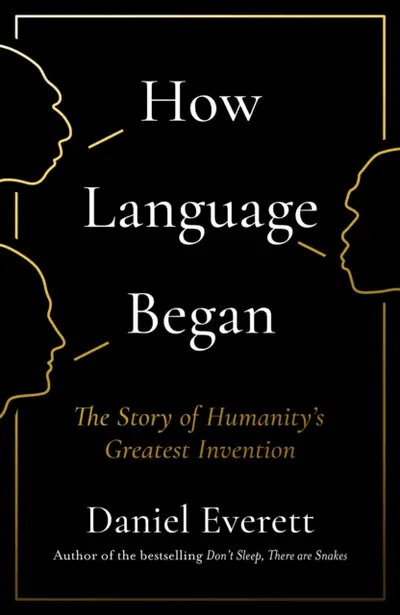
How Language Began
The Story of Humanity’s Greatest Invention
Price and availability
Not sold in this region
Available in: Andorra, Austria, Australia, Belgium, Bulgaria, Switzerland, Cyprus, Czechia, Germany, Denmark, Estonia, Spain, Finland, France, United Kingdom, Guernsey, Greece, Croatia, Hungary, Ireland, Isle of Man, Iceland, Italy, Jersey, Japan, Liechtenstein, Lithuania, Luxembourg, Latvia, Monaco, Malta, Netherlands, Norway, Poland, Portugal, Romania, Sweden, Slovenia, Slovakia, San Marino, Vatican City, South Africa
Stores: UK, EU, Australia. Not available in the United States store.
This title cannot be bought in this store yet: its supplier terms, territorial rights or price are still being confirmed.
For personal use under the eBook licence.
- Format
- EPUB
- DRM
- Not stated by the publisher
- Language
- English
- Publisher
- Profile
- Published
- 21 September 2017
- ISBN
- 9781782831280
- Subjects
- Prehistory, Language: history & general works, linguistics, Language: history and general works, Linguistics
About this book
In his groundbreaking new book Daniel Everett seeks answers to questions that have perplexed thinkers from Plato to Chomsky: when and how did language begin? what is it? and what is it for?Daniel Everett confounds the conventional wisdom that language originated with Homo sapiens 150,000 years ago and that we have a 'language instinct'. Drawing on evidence from a wide range of fields, including linguistics, archaeology, biology, anthropology and neuroscience, he shows that our ancient ancestors, Homo erectus, had the biological and mental equipment for speech one and half million years ago, and that their cultural and technological achievements (including building ocean-going boats) make it overwhelmingly likely they spoke some kind of language. How Language Began sheds new light on language and culture and what it means to be human and, as always, Daniel Everett spices his account with incident and anecdote. His book is convincing, arresting and entertaining.
Bibliographic data © Gardners Books Ltd.