PDF · English
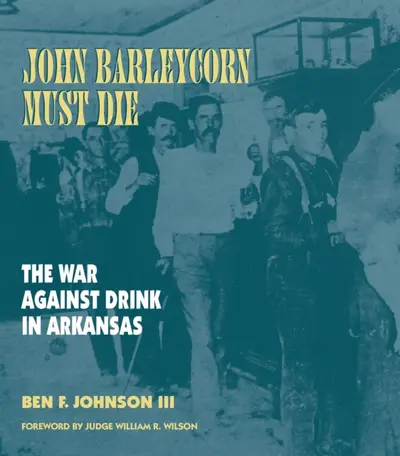
John Barleycorn Must Die
The War Against Drink in Arkansas
Price and availability
$36.99
Available in: Andorra, Austria, Australia, Belgium, Bulgaria, Canada, Switzerland, Cyprus, Czechia, Germany, Denmark, Estonia, Spain, Finland, France, United Kingdom, Guernsey, Greece, Croatia, Hungary, Ireland, Isle of Man, Iceland, Italy, Jersey, Japan, Liechtenstein, Lithuania, Luxembourg, Latvia, Monaco, Malta, Netherlands, Norway, Poland, Portugal, Romania, Sweden, Slovenia, Slovakia, San Marino, United States, Vatican City, South Africa
Stores: US, UK, Canada, EU, Australia.
Sign in to buyThe price is re-checked by the server before payment.
For personal use under the eBook licence.
- Format
- DRM
- Not stated by the publisher
- Language
- English
- Publisher
- University of Arkansas Press
- Published
- 1 March 2005
- ISBN
- 9781610752152
- Subjects
- Central Southern states, History, History of the Americas, Alcoholic beverages, History, History of the Americas
About this book
As the traditional British folk song that the rock group Traffic made famous in the 1970s and that lends its name to this book's title demonstrates, the battle against John Barleycorn was a losing one: "e;And little Sir John and the nut-brown bowl / Proved the strongest man at last."e; Ben Johnson's sweeping, highly readable, and extensively illustrated "e;spirited"e; overview of Arkansas's efforts to regulate and halt the consumption of alcohol reveals much about the texture of life and politics in the state-and country-as Arkansas grappled with strong opinions on both sides. After early attempts to keep drink from the American Indians during the colonial period, temperance groups' efforts switched to antebellum towns and middle-class citizens. After the Civil War new federal taxes on whiskey production led to violence between revenue agents and moonshiners, and the state joined the growing national movement against saloons that culminated in 1915 when the legislature approved a measure to halt the sale, manufacture, and distribution of alcohol-including that of Arkansas's substantial wine industry. The state supported national prohibition, but people became disillusioned with the widespread violations of the law. However, the state didn't repeal its own prohibition law until a fiscal crisis in 1935 required it in order to raise revenue. The new law only authorized retail liquor stores, not the return of taverns or bars. A final effort to restore laws against John Barleycorn in 1950 was rebuffed by voters. Still, there are a number of counties in Arkansas that remain dry and disputes over the granting of private club licenses continue to make news.
Bibliographic data © Gardners Books Ltd.