EPUB · English
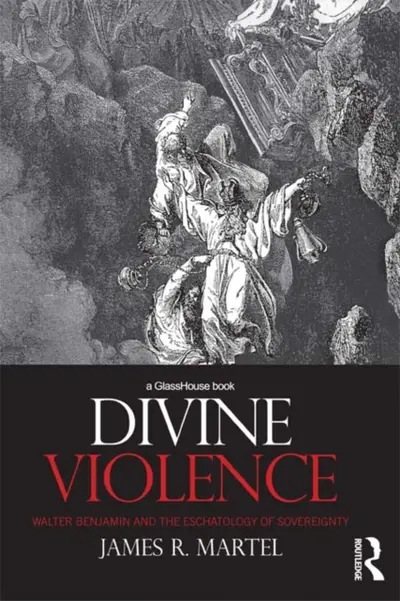
Divine Violence
Walter Benjamin and the Eschatology of Sovereignty
Price and availability
$78.99
Available in: Andorra, Austria, Australia, Belgium, Bulgaria, Canada, Switzerland, Cyprus, Czechia, Germany, Denmark, Estonia, Spain, Finland, France, United Kingdom, Guernsey, Greece, Croatia, Hungary, Ireland, Isle of Man, Iceland, Italy, Jersey, Japan, Liechtenstein, Lithuania, Luxembourg, Latvia, Monaco, Malta, Netherlands, Norway, Poland, Portugal, Romania, Sweden, Slovenia, Slovakia, San Marino, United States, Vatican City, South Africa
Stores: US, UK, Canada, EU, Australia.
Sign in to buyThe price is re-checked by the server before payment.
For personal use under the eBook licence.
- Format
- EPUB
- DRM
- Not stated by the publisher
- Language
- English
- Publisher
- Taylor & Francis
- Published
- 1 March 2013
- ISBN
- 9781136632556
- Subjects
- Western philosophy, from c 1900 -, Deconstructionism, Structuralism, Post-structuralism, Social & political philosophy, Political science & theory, Jurisprudence & general issues, Jurisprudence & philosophy of law, Judicial review, Political science and theory, Religion and politics
About this book
Divine Violence looks at the question of political theology and its connection to sovereignty. It argues that the practice of sovereignty reflects a Christian eschatology, one that proves very hard to overcome even by left thinkers, such as Arendt and Derrida, who are very critical of it. These authors fall into a trap described by Carl Schmitt whereby one is given a (false) choice between anarchy and sovereignty, both of which are bound within-and return us to-the same eschatological envelope. In Divine Violence, the author argues that Benjamin supplies the correct political theology to help these thinkers. He shows how to avoid trying to get rid of sovereignty (the "e;anarchist move"e; that Schmitt tells us forces us to "e;decide against the decision"e;) and instead to seek to de-center and dislocate sovereignty so that it's mythological function is disturbed. He does this with the aid of divine violence, a messianic force that comes into the world to undo its own mythology, leaving nothing in its wake. Such a move clears the myths of sovereignty away, turning us to our own responsibility in the process. In that way, the author argues,Benjamin succeeds in producing an anarchism that is not bound by Schmitt's trap but which is sustained even while we remain dazzled by the myths of sovereignty that structure our world.Divine Violence will be of interest to students of political theory, to those with an interest in political theology, philosophy and deconstruction, and to those who are interested in thinking about some of the dilemmas that the 'left' finds itself in today.
Bibliographic data © Gardners Books Ltd.