PDF · English
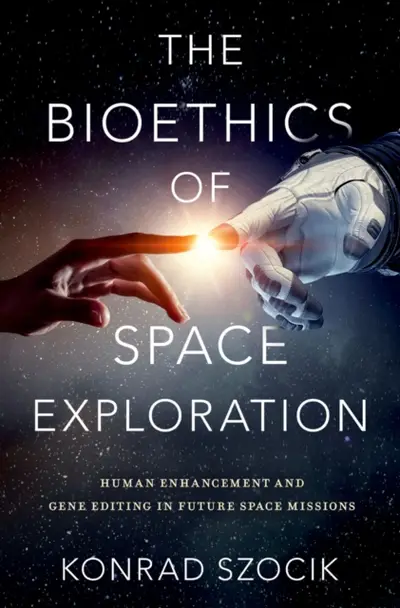
Bioethics of Space Exploration
Price and availability
$20.99
Available in: Andorra, Austria, Australia, Belgium, Bulgaria, Canada, Switzerland, Cyprus, Czechia, Germany, Denmark, Estonia, Spain, Finland, France, United Kingdom, Guernsey, Greece, Croatia, Hungary, Ireland, Isle of Man, Iceland, Italy, Jersey, Japan, Liechtenstein, Lithuania, Luxembourg, Latvia, Monaco, Malta, Netherlands, Norway, Poland, Portugal, Romania, Sweden, Slovenia, Slovakia, San Marino, United States, Vatican City, South Africa
Stores: US, UK, Canada, EU, Australia.
Sign in to buyThe price is re-checked by the server before payment.
For personal use under the eBook licence.
- Format
- DRM
- Not stated by the publisher
- Language
- English
- Publisher
- Oxford University Press
- Published
- 30 May 2023
- ISBN
- 9780197628485
- Subjects
- Astronomical observation: observatories, equipment & methods, Biology, life sciences, Bio-ethics, Genetics (non-medical), Computer modelling & simulation, Astronomical observation: observatories, equipment and methods, Biology, life sciences, Bioethics, Genetics (non-medical), Computer modelling and simulation
About this book
The first book devoted to the bioethics of the space-mission environment, The Bioethics of Space Exploration explores the ethical status of possible biomedical challenges in future long-term space missions. Konrad Szocik thoroughly examines arguments favoring and opposing human enhancement, accompanied by somatic and germline gene editing, methodology of space-mission bioethics, and moral bioenhancement. In particular, the three main types of space missions--scientific missions, commercial missions, and space colonization missions--prompt different bioethical discussions and levels of human involvement. Szocik also considers whether the possibility of saving humanity through space colonization is compatible with ethics of quality of life and the philosophy of antinatalism. Presented from an issue-driven and case-driven perspective, The Bioethics of Space Exploration highlights the utility of different normative systems for philosophers, ethicists, and social scientists alike. For any reader interested in the broader humanistic and social approach to space missions, these insightful discussions provide a new perspective into the future of space missions and the potential for radical biomedical technologies.
Bibliographic data © Gardners Books Ltd.