PDF · English
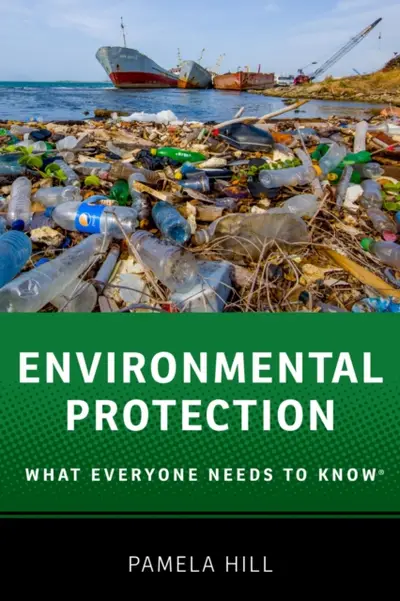
Environmental Protection
What Everyone Needs to Know(R)
Price and availability
$12.99
Available in: Andorra, Austria, Australia, Belgium, Bulgaria, Canada, Switzerland, Cyprus, Czechia, Germany, Denmark, Estonia, Spain, Finland, France, United Kingdom, Guernsey, Greece, Croatia, Hungary, Ireland, Isle of Man, Iceland, Italy, Jersey, Japan, Liechtenstein, Lithuania, Luxembourg, Latvia, Monaco, Malta, Netherlands, Norway, Poland, Portugal, Romania, Sweden, Slovenia, Slovakia, San Marino, United States, Vatican City, South Africa
Stores: US, UK, Canada, EU, Australia.
Sign in to buyThe price is re-checked by the server before payment.
For personal use under the eBook licence.
- Format
- DRM
- Not stated by the publisher
- Language
- English
- Publisher
- Oxford University Press
- Published
- 20 March 2017
- ISBN
- 9780190223083
- Subjects
- Environmental economics, International environmental law, The environment, Environmental policy & protocols, Environmental management, Pollution & threats to the environment, KCVG, Public international law: environment, The environment, Environmental policy and protocols, Environmental management, Pollution and threats to the environment
About this book
Although climate change and pollution make near-daily appearances in the news, humans have not always recognized that the environment needs to be protected. Only after the publication of Rachel Carson's Silent Spring in 1962 did environmental protection became a political and social priority. In Environmental Protection: What Everyone Needs to Know , environmental lawyer Pamela Hill offers clear, engaging answers to some of the most pressing questions facing us today. She discusses the science behind current environmental issues, defining key terms such as ecosystems, pollutants, and endocrine disruptors. Hill explains why our environment needs protection, using examples from history and current events, from the Irish potato famine to the BP oil spill in the Gulf of Mexico and the drinking water crisis in Flint, Michigan. She also assesses the effectiveness of landmark laws and treaties, including the Clean Air Act, the Endangered Species Act, and the Kyoto Protocol. To what extent is it acceptable to rank human interests over ecological interests? And is it fair to ask developing countries to reduce emissions, even though they bear little responsibility for our current environmental problems? Hill identifies the greatest environmental threats we are facing today and suggests what we need to do as citizens, businesspeople, and lawmakers to protect the environment for each other and for future generations.
Bibliographic data © Gardners Books Ltd.