PDF · English
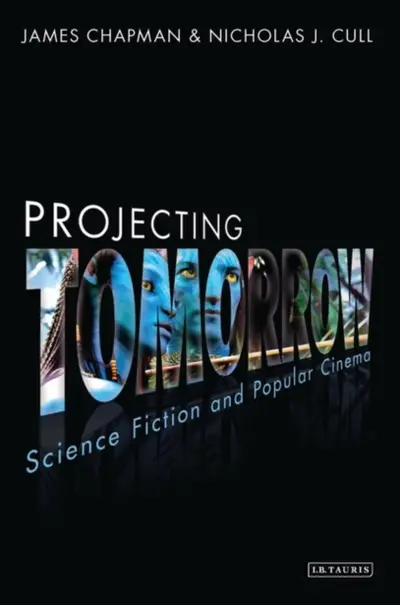
Projecting Tomorrow
Science Fiction and Popular Cinema
Price and availability
$32.99
Available in: Andorra, Austria, Australia, Belgium, Bulgaria, Canada, Switzerland, Cyprus, Czechia, Germany, Denmark, Estonia, Spain, Finland, France, United Kingdom, Guernsey, Greece, Croatia, Hungary, Ireland, Isle of Man, Iceland, Italy, Jersey, Japan, Liechtenstein, Lithuania, Luxembourg, Latvia, Monaco, Malta, Netherlands, Norway, Poland, Portugal, Romania, Sweden, Slovenia, Slovakia, San Marino, United States, Vatican City, South Africa
Stores: US, UK, Canada, EU, Australia.
Sign in to buyThe price is re-checked by the server before payment.
For personal use under the eBook licence.
- Format
- DRM
- Not stated by the publisher
- Language
- English
- Publisher
- Bloomsbury Publishing
- Published
- 30 January 2013
- Pages
- 256
- ISBN
- 9780857721846
- Subjects
- Film: styles & genres, Space opera, Popular culture, Media studies, ATFN, Science fiction: space opera, JBCC1, JBCT
About this book
Cinema and science fiction were made for each other. The science fiction genre has produced some of the most extraordinary films ever made, yet science fiction cinema is about more than just special effects. It has also provided a vehicle for filmmakers and writers to comment on their own societies and cultures. This new exploration of the genre examines landmark science fiction films from the 1930s to the present. They include genre classics such as "e;Things to Come"e;, "e;Forbidden Planet"e; and "e;2001: A Space Odyssey"e; alongside modern blockbusters "e;Star Wars"e; and "e;Avatar"e;. Chapman and Cull consider both screen originals and adaptations of the work of major science fiction authors. They also range widely across the genre from pulp adventure and space opera to political allegory and speculative documentary - there is even a science fiction musical. Informed throughout by extensive research in US and British archives, the book documents the production histories of each film to show how they made their way to the screen - and why they turned out the way they did.
Bibliographic data © Gardners Books Ltd.