PDF · English
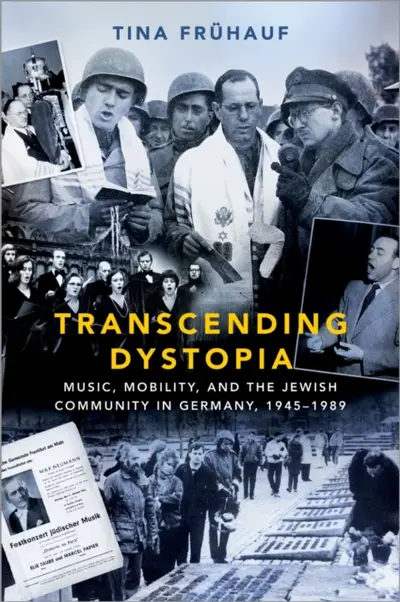
Transcending Dystopia
Music, Mobility, and the Jewish Community in Germany, 1945-1989
Price and availability
$62.99
Available in: Andorra, Austria, Australia, Belgium, Bulgaria, Canada, Switzerland, Cyprus, Czechia, Germany, Denmark, Estonia, Spain, Finland, France, United Kingdom, Guernsey, Greece, Croatia, Hungary, Ireland, Isle of Man, Iceland, Italy, Jersey, Japan, Liechtenstein, Lithuania, Luxembourg, Latvia, Monaco, Malta, Netherlands, Norway, Poland, Portugal, Romania, Sweden, Slovenia, Slovakia, San Marino, United States, Vatican City, South Africa
Stores: US, UK, Canada, EU, Australia.
Sign in to buyThe price is re-checked by the server before payment.
For personal use under the eBook licence.
- Format
- DRM
- Not stated by the publisher
- Language
- English
- Publisher
- Oxford University Press
- Published
- 1 January 2021
- ISBN
- 9780197532980
- Subjects
- Germany, c 1800 to c 1900, 20th century, History of art & design styles: c 1800 to c 1900, Theory of music & musicology, Modern history to 20th century: c 1700 to c 1900, The Cold War, Judaism, 3MN, 3MP, AGA, Theory of music and musicology, NH, NHTW, QRJ
About this book
By the end of the Second World War, Germany was in ruins and its Jewish population so gravely diminished that a rich cultural life seemed unthinkable. And yet, as surviving Jews returned from hiding, the camps, and their exiles abroad, so did their music. Transcending Dystopia tells the story of the remarkable revival of Jewish musical activity that developed in postwar Germany against all odds. Author Tina Fruhauf provides a kaleidoscopic panorama of musical practices in worship and social life across the country to illuminate how music contributed to transitions and transformations within and beyond Jewish communities in the aftermath of the Holocaust. Drawing on newly unearthed sources from archives and private collections, this book covers a wide spectrum of musical activity-from its role in commemorations and community events to synagogue concerts and its presence on the radio-across the divided Germany until the Fall of the Wall in 1989. Fruhauf's use of mobility as a conceptual framework reveals the myriad ways in which the reemergence of Jewish music in Germany was shaped by cultural transfer and exchange that often relied on the circulation of musicians, their ideas, and practices within and between communities. By illuminating the centrality of mobility to Jewish experiences and highlighting how postwar Jewish musical practices in Germany were defined by politics that reached across national borders to the United States and Israel, this pioneering study makes a major contribution to our understanding of Jewish life and culture in a transnational context.
Bibliographic data © Gardners Books Ltd.