EPUB · English
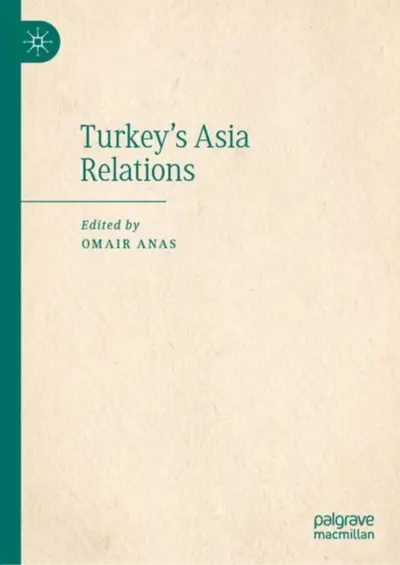
Turkey's Asia Relations
Price and availability
$175.99
Available in: Andorra, Austria, Australia, Belgium, Bulgaria, Canada, Switzerland, Cyprus, Czechia, Germany, Denmark, Estonia, Spain, Finland, France, United Kingdom, Guernsey, Greece, Croatia, Hungary, Ireland, Isle of Man, Iceland, Italy, Jersey, Japan, Liechtenstein, Lithuania, Luxembourg, Latvia, Monaco, Malta, Netherlands, Norway, Poland, Portugal, Romania, Sweden, Slovenia, Slovakia, San Marino, United States, Vatican City, South Africa
Stores: US, UK, Canada, EU, Australia.
Sign in to buyThe price is re-checked by the server before payment.
For personal use under the eBook licence.
- Format
- EPUB
- DRM
- Not stated by the publisher
- Language
- English
- Publisher
- Springer International Publishing
- Published
- 21 February 2022
- ISBN
- 9783030935153
- Subjects
- Asia, Middle East, History: specific events & topics, Politics & government, Political science & theory, International relations, Asia, Middle East, Politics and government, Political science and theory, International relations, History: specific events and topics
About this book
This book explores shifts in Turkey's foreign policy and the relevance of Turkey's reconnect offensive with Asia. With the end of the Cold War, Turkey and the West had lost the mutuality of interests and threat perceptions, particularly towards Russia. Western countries are now occupied by the rise of China and are in search of new allies in the Asia Pacific. Turkey is left in its region to deal with Russia and crises that are primary outcomes of Western failures in Syria, Libya, Iraq, Azerbaijan, and Qatar. In the absence of its Western allies, Turkey engaged with Russia alone to deconflict and stabilise Syria, Libya, and Azerbaijan. Turkey's ruling conservative AK Party, however, had won elections from 2002 to 2012 on a strong pro-EU and pro-West agenda. Now, it is talking about 'strategic autonomy', 'multidimensionalism', 'diversification', or 'the world is bigger than five'. The new foreign policy gestures are underpinned by the rise of the domestic defence industry, nationalistpolitics at home, and increased trade relations with key Asian economies, China, India, and Indonesia. At an international level, the ruling party has instrumentalised strong criticism of the West for injustice and neglect of the Turkish, Muslim, Islamic, and non-western world. Although this reminds of the history of Turkey's failed quests to shift from a West-centric foreign policy to an unknown direction, the book argues that Turkey's reconnect with Asia is rather to complement and strengthen its relations with the West.
Bibliographic data © Gardners Books Ltd.