PDF · English
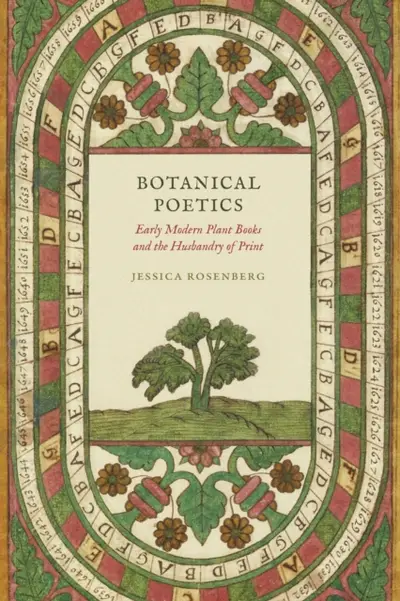
Botanical Poetics
Early Modern Plant Books and the Husbandry of Print
Price and availability
$87.99
Available in: Andorra, Austria, Australia, Belgium, Bulgaria, Canada, Switzerland, Cyprus, Czechia, Germany, Denmark, Estonia, Spain, Finland, France, United Kingdom, Guernsey, Greece, Croatia, Hungary, Ireland, Isle of Man, Iceland, Italy, Jersey, Japan, Liechtenstein, Lithuania, Luxembourg, Latvia, Monaco, Malta, Netherlands, Norway, Poland, Portugal, Romania, Sweden, Slovenia, Slovakia, San Marino, United States, Vatican City, South Africa
Stores: US, UK, Canada, EU, Australia.
Sign in to buyThe price is re-checked by the server before payment.
For personal use under the eBook licence.
- Format
- DRM
- Not stated by the publisher
- Language
- English
- Publisher
- University of Pennsylvania Press, Inc.
- Published
- 25 October 2022
- ISBN
- 9781512823349
- Subjects
- Literary studies: c 1500 to c 1800, Literary studies: c 1600 to c 1800
About this book
During the middle years of Queen Elizabeth's reign, the number of books published with titles that described themselves as flowers, gardens, or forests more than tripled. During those same years, English printers turned out scores of instructional manuals on gardening and husbandry, retailing useful knowledge to a growing class of literate landowners and pleasure gardeners. Both trends, Jessica Rosenberg shows, reflected a distinctive style of early modern plant-thinking, one that understood both plants and poems as composites of small pieces-slips or seeds to be recirculated by readers and planters.Botanical Poetics brings together studies of ecology, science, literary form, and the material text to explore how these developments transformed early modern conceptions of nature, poetic language, and the printed book. Drawing on little-studied titles in horticulture and popular print alongside poetry by Shakespeare, Spenser, and others, Rosenberg reveals how early modern print used a botanical idiom to anticipate histories of its own reading and reception, whether through replanting, uprooting, or fantasies of common property and proliferation. While our conventional narratives of English literary culture in this period see reading as an increasingly private practice, and literary production as more and more of an authorial domain, Botanical Poetics uncovers an alternate tradition: of commonplaces and common ground, of slips of herbs and poetry circulated, shared, and multiplied.
Bibliographic data © Gardners Books Ltd.