PDF · English
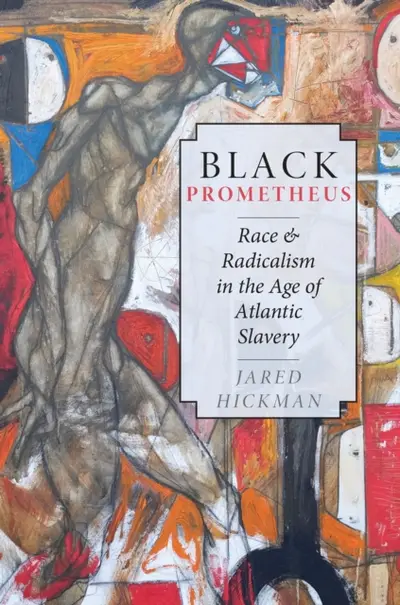
Black Prometheus
Race and Radicalism in the Age of Atlantic Slavery
Price and availability
$37.99
Available in: Andorra, Austria, Australia, Belgium, Bulgaria, Canada, Switzerland, Cyprus, Czechia, Germany, Denmark, Estonia, Spain, Finland, France, United Kingdom, Guernsey, Greece, Croatia, Hungary, Ireland, Isle of Man, Iceland, Italy, Jersey, Japan, Liechtenstein, Lithuania, Luxembourg, Latvia, Monaco, Malta, Netherlands, Norway, Poland, Portugal, Romania, Sweden, Slovenia, Slovakia, San Marino, United States, Vatican City, South Africa
Stores: US, UK, Canada, EU, Australia.
Sign in to buyThe price is re-checked by the server before payment.
For personal use under the eBook licence.
- Format
- DRM
- Not stated by the publisher
- Language
- English
- Publisher
- Oxford University Press
- Published
- 28 September 2016
- ISBN
- 9780190272593
- Subjects
- English, Literary studies: c 1800 to c 1900, Ancient religions & mythologies, Black & Asian studies, 2ACB, Literary studies: c 1800 to c 1900, JBSL, QRRT1
About this book
How did an ancient mythological figure who stole fire from the gods become a face of the modern, lending his name to trailblazing spaceships and radical publishing outfits alike? How did Prometheus come to represent a notion of civilizational progress through revolution--scientific, political, and spiritual--and thereby to center nothing less than a myth of modernity itself ? The answer Black Prometheus gives is that certain features of the myth--its geographical associations, iconography of bodily suffering, and function as a limit case in a long tradition of absolutist political theology--made it ripe for revival and reinvention in a historical moment in which freedom itself was racialized, in what was the Age both of Atlantic revolution and Atlantic slavery. Contained in the various incarnations of the modern Prometheus--whether in Mary Shelley's esoteric novel, Frankenstein, Denmark Vesey's real-world recruitment of slave rebels, or popular travelogues representing Muslim jihadists against the Russian empire in the Caucasus-- isa profound debate about the means and ends of liberation in our globalized world. Tracing the titan's rehabilitation and unprecedented exaltation in the eighteenth and nineteenth centuries across a range of genres and geographies turns out to provide a way to rethink the relationship between race, religion, and modernity and to interrogate the Eurocentric and secularist assumptions of our deepest intellectual traditions of critique.
Bibliographic data © Gardners Books Ltd.