PDF · English
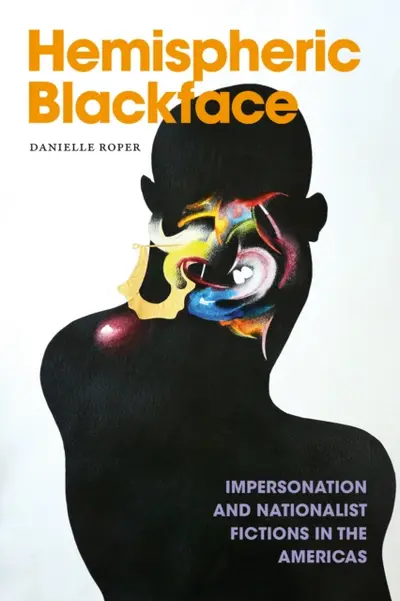
Hemispheric Blackface
Impersonation and Nationalist Fictions in the Americas
Price and availability
$36.99
Available in: Andorra, Austria, Australia, Belgium, Bulgaria, Canada, Switzerland, Cyprus, Czechia, Germany, Denmark, Estonia, Spain, Finland, France, United Kingdom, Guernsey, Greece, Croatia, Hungary, Ireland, Isle of Man, Iceland, Italy, Jersey, Japan, Liechtenstein, Lithuania, Luxembourg, Latvia, Monaco, Malta, Netherlands, Norway, Poland, Portugal, Romania, Sweden, Slovenia, Slovakia, San Marino, United States, Vatican City, South Africa
Stores: US, UK, Canada, EU, Australia.
Sign in to buyThe price is re-checked by the server before payment.
For personal use under the eBook licence.
- Format
- DRM
- Not stated by the publisher
- Language
- English
- Publisher
- Duke University Press
- Published
- 18 April 2025
- ISBN
- 9781478060871
- Subjects
- USA, Theatre studies, Social & cultural history, Ethnic studies, Black & Asian studies, United States of America, USA, ATD, JBSL, NHTB
About this book
In Hemispheric Blackface, Danielle Roper examines blackface performance and its relationship to twentieth- and twenty-first-century nationalist fictions of mestizaje, creole nationalism, and other versions of postracialism in the Americas. Challenging both the dominance of the US minstrel tradition and the focus on the nation in blackface studies, Roper maps a hemispheric network of racial impersonation in Peru, Bolivia, Colombia, Jamaica, Cuba, and Miami. She analyzes blackface performance in the aftermath of the turn to multiculturalism in Latin America, the emergence of modern blackness in Jamaica, and the rise of Barack Obama in the United States, showing how blackface remains embedded in cultural entertainment. Contending that the Americas are linked by repeating nationalist fictions of postracialism, colorblindness, and myths of racial democracy, Roper assesses how acts of impersonation mediate the ongoing power of these narratives and enable people to comprehend advancements and reversals in racial equality. Rather than simply framing blackface as liberatory or oppressive, Roper traces its emergence from a shared history of slavery and the varied politics of racial enjoyment throughout the hemisphere.
Bibliographic data © Gardners Books Ltd.