PDF · English
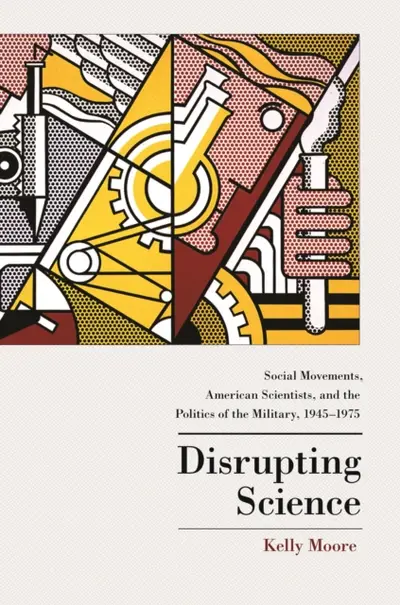
Disrupting Science
Social Movements, American Scientists, and the Politics of the Military, 1945-1975
Price and availability
$40.99
Available in: Andorra, Austria, Australia, Belgium, Bulgaria, Canada, Switzerland, Cyprus, Czechia, Germany, Denmark, Estonia, Spain, Finland, France, United Kingdom, Guernsey, Greece, Croatia, Hungary, Ireland, Isle of Man, Iceland, Italy, Jersey, Japan, Liechtenstein, Lithuania, Luxembourg, Latvia, Monaco, Malta, Netherlands, Norway, Poland, Portugal, Romania, Sweden, Slovenia, Slovakia, San Marino, United States, Vatican City, South Africa
Stores: US, UK, Canada, EU, Australia.
Sign in to buyThe price is re-checked by the server before payment.
For personal use under the eBook licence.
- Format
- DRM
- Not stated by the publisher
- Language
- English
- Publisher
- Princeton University Press
- Published
- 11 April 2009
- ISBN
- 9781400823802
- Subjects
- Population & demography, Impact of science & technology on society, History of science, Geography, Population and demography, Impact of science and technology on society, History of science
About this book
In the decades following World War II, American scientists were celebrated for their contributions to social and technological progress. They were also widely criticized for their increasingly close ties to military and governmental power--not only by outside activists but from among the ranks of scientists themselves. Disrupting Science tells the story of how scientists formed new protest organizations that democratized science and made its pursuit more transparent. The book explores how scientists weakened their own authority even as they invented new forms of political action. Drawing extensively from archival sources and in-depth interviews, Kelly Moore examines the features of American science that made it an attractive target for protesters in the early cold war and Vietnam eras, including scientists' work in military research and activities perceived as environmentally harmful. She describes the intellectual traditions that protesters drew from--liberalism, moral individualism, and the New Left--and traces the rise and influence of scientist-led protest organizations such as Science for the People and the Union of Concerned Scientists. Moore shows how scientist protest activities disrupted basic assumptions about science and the ways scientific knowledge should be produced, and recast scientists' relationships to political and military institutions. Disrupting Science reveals how the scientific community cumulatively worked to unbind its own scientific authority and change how science and scientists are perceived. In doing so, the book redefines our understanding of social movements and the power of insider-led protest.
Bibliographic data © Gardners Books Ltd.