PDF · English
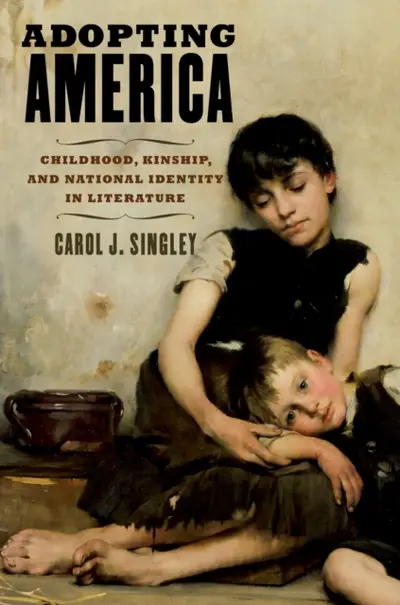
Adopting America
Childhood, Kinship, and National Identity in Literature
Price and availability
$29.99
Available in: Andorra, Austria, Australia, Belgium, Bulgaria, Canada, Switzerland, Cyprus, Czechia, Germany, Denmark, Estonia, Spain, Finland, France, United Kingdom, Guernsey, Greece, Croatia, Hungary, Ireland, Isle of Man, Iceland, Italy, Jersey, Japan, Liechtenstein, Lithuania, Luxembourg, Latvia, Monaco, Malta, Netherlands, Norway, Poland, Portugal, Romania, Sweden, Slovenia, Slovakia, San Marino, United States, Vatican City, South Africa
Stores: US, UK, Canada, EU, Australia.
Sign in to buyThe price is re-checked by the server before payment.
For personal use under the eBook licence.
- Format
- DRM
- Not stated by the publisher
- Language
- English
- Publisher
- Oxford University Press
- Published
- 1 January 2012
- ISBN
- 9780199778881
- Subjects
- USA, Literary studies: general, Children’s & teenage literature studies, History of the Americas, United States of America, USA, Literary studies: general, Children’s and teenage literature studies: general, NHK
About this book
American literature abounds with orphans who experience adoption or placements that resemble adoption. These stories do more than recount adventures of children living away from home. They tell an American story of family and national identity. In narratives from the seventeenth to the early twentieth century, adoption functions as narrative event and trope that describes the American migratory experience, the impact of Calvinist faith, and the growth of democratic individualism. The roots of literary adoption appear in the discourse of Puritan settlers, who ambivalently took leave of their birth parent country and portrayed themselves as abandoned children. Believing they were chosen children of God, they also prayed for spiritual adoption and emulated God's grace by extending adoption to others. Nineteenth-century adoption literature develops from this notion of adoption as salvation and from simultaneous attachments to the Old World and the New. In domestic fiction of the mid-nineteenth century, adoption also reflects a focus on nurture in childrearing, increased mobility in the nation, and middle-class concerns over immigration and urbanization, assuaged when the orphan finds a proper, loving home. Adoption signals fresh starts and the opportunity for success without genealogical constraints, especially for white males, but inflected by gender and racial biases, it often entails dependency for girls and children of color. A complex signifier of difference, adoption gives voice to sometimes contradictory calls to origins and fresh beginning; to feelings of worthiness and unworthiness. In writings from Cotton Mather to Edith Wharton, it both replicates and offers an alternative to the genealogical norm, evoking ambivalence as it shapes national mythologies.
Bibliographic data © Gardners Books Ltd.