PDF · English
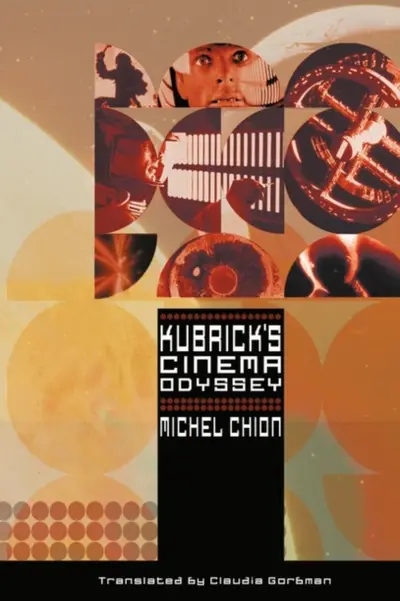
Kubrick's Cinema Odyssey
Price and availability
$41.99
Available in: Andorra, Austria, Australia, Belgium, Bulgaria, Canada, Switzerland, Cyprus, Czechia, Germany, Denmark, Estonia, Spain, Finland, France, United Kingdom, Guernsey, Greece, Croatia, Hungary, Ireland, Isle of Man, Iceland, Italy, Jersey, Japan, Liechtenstein, Lithuania, Luxembourg, Latvia, Monaco, Malta, Netherlands, Norway, Poland, Portugal, Romania, Sweden, Slovenia, Slovakia, San Marino, United States, Vatican City, South Africa
Stores: US, UK, Canada, EU, Australia.
Sign in to buyThe price is re-checked by the server before payment.
For personal use under the eBook licence.
- Format
- DRM
- Not stated by the publisher
- Language
- English
- Publisher
- Bloomsbury Publishing
- Published
- 25 July 2019
- Pages
- 196
- ISBN
- 9781838716653
- Subjects
- Film, TV & radio, Film theory & criticism, Individual film directors, film-makers, ATF, ATFA, ATFB
About this book
Author wrote bestselling bfi Publishing title David Lynch 'a joy to the reader of film criticism' Choice; 2001: A Space Odyssey to be re-released in cinemas in The Spring and highly likely to be the focus of much media attention in the new year; Stanley Kubrick's 2001: A Space Odyssey (1968), based on Arthur C Clarke's novel, is one of the most ambitious films ever made, an epic of space exploration that takes in the whole history of humanity (as well as speculation about its future). A technical triumph that stands up today 2001 is topical also because of its meditation on the relationship between man, animal and machine. Haunting and enigmatic, it's a film that contains myriad images that seem to defy any explanation. In this multilayered study, acclaimed critic and theorist of film sound Michel Chion offers some keys to understanding 2001. Setting the film first in its historical and cultural contexts (the Space Race, the Cold War, 1960s psychedelia), Chion goes on to locate it within Kubrick's career. He then conducts a meticulous and subtle analysis of its structure and style, arguing that 2001 is an 'absolute film', a unique assemblage of cinema's elements, through which pulses a vision of human existence. 'Animals who know they will die, beings lost on earth, forever caught between two species, not animal enough, not cerebral enough.' In a supplementary chapter Chion argues that Kubrick's last film, Eyes Wide Shut (1999), is a return to 2001, a final statement of its concerns. And in a series of appendices Chion provides production details, an analytic synopsis, credits and a consideration of the legacy of 2001.
Bibliographic data © Gardners Books Ltd.