PDF · English
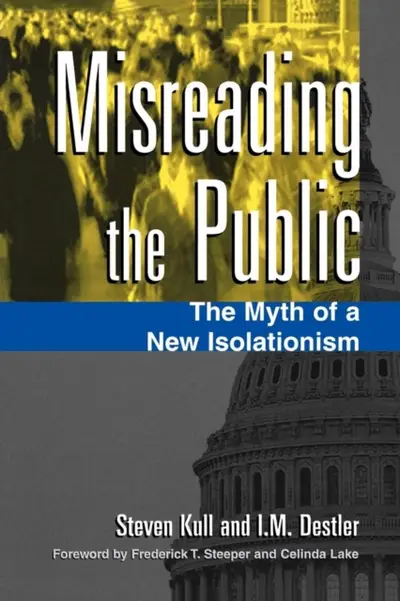
Misreading the Public
The Myth of a New Isolationism
Price and availability
$24.99
Available in: Andorra, Austria, Australia, Belgium, Bulgaria, Canada, Switzerland, Cyprus, Czechia, Germany, Denmark, Estonia, Spain, Finland, France, United Kingdom, Guernsey, Greece, Croatia, Hungary, Ireland, Isle of Man, Iceland, Italy, Jersey, Japan, Liechtenstein, Lithuania, Luxembourg, Latvia, Monaco, Malta, Netherlands, Norway, Poland, Portugal, Romania, Sweden, Slovenia, Slovakia, San Marino, United States, Vatican City, South Africa
Stores: US, UK, Canada, EU, Australia.
Sign in to buyThe price is re-checked by the server before payment.
For personal use under the eBook licence.
- Format
- DRM
- Not stated by the publisher
- Language
- English
- Publisher
- Bloomsbury Publishing (USA)
- Published
- 1 January 1999
- Pages
- 330
- ISBN
- 9780815791386
- Subjects
- USA, Central government, International relations, Diplomacy, United States of America, USA, Central / national / federal government, International relations, Diplomacy
About this book
Do American policymakers really know what the American public wants in U.S. foreign policy? Through extensive interviews with members of the policy community, the authors reveal a pervasive belief especially in Congress that, in the wake of the cold war, the public is showing a new isolationism: opposition to foreign aid, hostility to the United Nations, and aversion to contributing U.S. troops to peacekeeping operations. This view of the public has in turn had a significant impact on U.S. foreign policy. However, through a comprehensive review of polling data, as well as focus groups, the authors show that all these beliefs about the public are myths. The public does complain that the United States is playing the role of dominant world leader more than it should, but this does not lead to a desire to withdraw. Instead people prefer to share responsibility with other nations, particularly through the UN. The authors offer explanations of how such a misperception can occur and suggest ways to improve communication between the public and policymakers, including better presentation of polling data and more attention by practitioners to a wider public.
Bibliographic data © Gardners Books Ltd.