EPUB · English
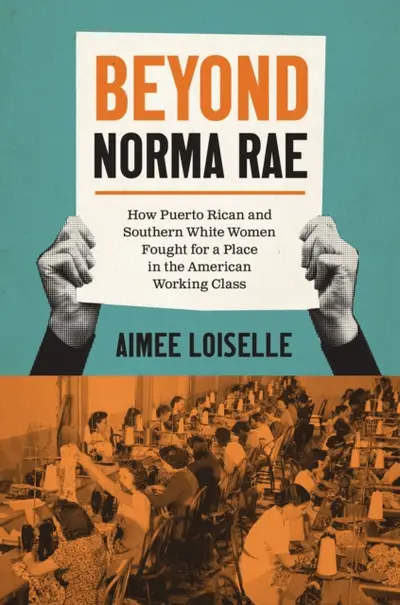
Beyond Norma Rae
How Puerto Rican and Southern White Women Fought for a Place in the American Working Class
Price and availability
$168.99
Available in: Andorra, Austria, Australia, Belgium, Bulgaria, Canada, Switzerland, Cyprus, Czechia, Germany, Denmark, Estonia, Spain, Finland, France, United Kingdom, Guernsey, Greece, Croatia, Hungary, Ireland, Isle of Man, Iceland, Italy, Jersey, Japan, Liechtenstein, Lithuania, Luxembourg, Latvia, Monaco, Malta, Netherlands, Norway, Poland, Portugal, Romania, Sweden, Slovenia, Slovakia, San Marino, United States, Vatican City, South Africa
Stores: US, UK, Canada, EU, Australia.
Sign in to buyThe price is re-checked by the server before payment.
For personal use under the eBook licence.
- Format
- EPUB
- DRM
- Not stated by the publisher
- Language
- English
- Publisher
- The University of North Carolina Press
- Published
- 14 November 2023
- ISBN
- 9781469676159
- Subjects
- USA, California, History of the Americas, Gender studies, gender groups, Industrial relations, health & safety, Industrial relations, United States of America, USA, Gender studies, gender groups, Industrial arbitration and negotiation, Trade unions, History of the Americas
About this book
In the late 1970s, Hollywood producers took the published biography of Crystal Lee Sutton, a white southern textile worker, and transformed it into a blockbuster 1979 film, Norma Rae, featuring Sally Field in the title role. This fascinating book reveals how the film and the popular icon it created each worked to efface the labor history that formed the foundation of the films story. Drawing on an impressive range of sourcesunion records, industry reports, film scripts, and oral historiesAimee Loiselles cutting-edge scholarship shows how gender, race, culture, film, and mythology have reconfigured and often undermined the history of the American working class and its labor activism.While Norma Rae constructed a powerful image of individual defiance by a white working-class woman, Loiselle demonstrates that female industrial workers across the country and from diverse racial backgrounds understood the significance of cultural representation and fought to tell their own stories. Loiselle painstakingly reconstructs the underlying histories of working women in this era and makes clear that cultural depictions must be understood as the complicated creations they are.
Bibliographic data © Gardners Books Ltd.