PDF · English
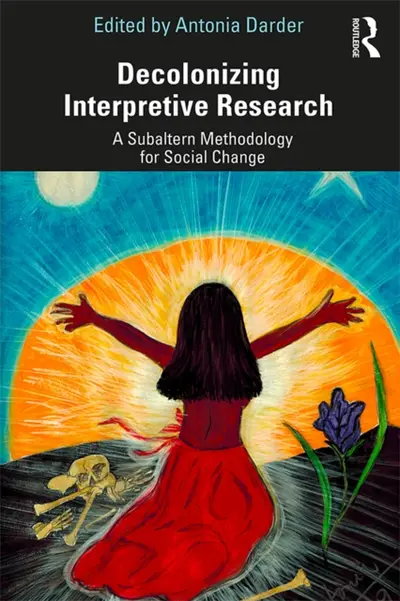
Decolonizing Interpretive Research
A Subaltern Methodology for Social Change
Price and availability
$52.99
Available in: Andorra, Austria, Australia, Belgium, Bulgaria, Canada, Switzerland, Cyprus, Czechia, Germany, Denmark, Estonia, Spain, Finland, France, United Kingdom, Guernsey, Greece, Croatia, Hungary, Ireland, Isle of Man, Iceland, Italy, Jersey, Japan, Liechtenstein, Lithuania, Luxembourg, Latvia, Monaco, Malta, Netherlands, Norway, Poland, Portugal, Romania, Sweden, Slovenia, Slovakia, San Marino, United States, Vatican City, South Africa
Stores: US, UK, Canada, EU, Australia.
Sign in to buyThe price is re-checked by the server before payment.
For personal use under the eBook licence.
- Format
- DRM
- Not stated by the publisher
- Language
- English
- Publisher
- Taylor & Francis
- Published
- 30 May 2019
- ISBN
- 9781351045063
- Subjects
- Philosophy: epistemology & theory of knowledge, Ethnic studies, Social research & statistics, Higher & further education, tertiary education, JBSL, Social research and statistics, Higher education, tertiary education, QDTK
About this book
To what extent do Western political and economic interests distort perceptions and affect the Western production of research about the other? The concept of 'colonializing epistemologies' describes how knowledges outside the Western purview are often not only rendered invisible but either absorbed or destroyed.Decolonizing Interpretive Research outlines a form of oppositional study that undertakes a critical analysis of bodies of knowledge in any field that engages with issues related to the lives and survival of those deemed as other. It focuses on creating intellectual spaces that will facilitate new readings of the world and lead toward change, both in theory and practice. The book begins by conceptualizing the various aspects of the decolonizing interpretive research approach for the reader, and the following six chapters each focus on one of these issues, grounded in a specific decolonizing interpretive study. With a foreword by Linda Tuhiwai Smith, this book will allow readers to not only engage with the conceptual framework of this decolonizing methodology but will also give them access to examples of how the methodology has informed decolonizing interpretive studies in practice.
Bibliographic data © Gardners Books Ltd.