EPUB · English
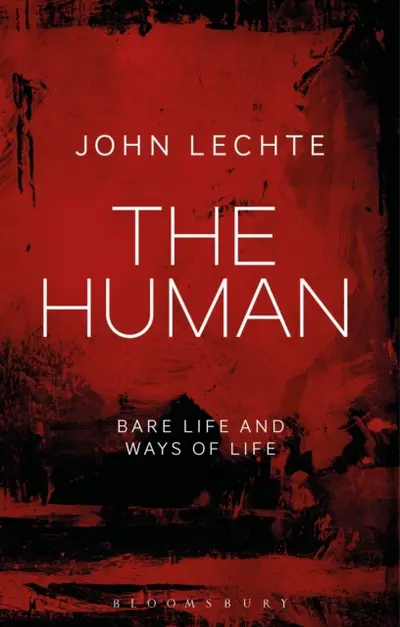
Human
Bare Life and Ways of Life
Price and availability
$42.99
Available in: Andorra, Austria, Australia, Belgium, Bulgaria, Canada, Switzerland, Cyprus, Czechia, Germany, Denmark, Estonia, Spain, Finland, France, United Kingdom, Guernsey, Greece, Croatia, Hungary, Ireland, Isle of Man, Iceland, Italy, Jersey, Japan, Liechtenstein, Lithuania, Luxembourg, Latvia, Monaco, Malta, Netherlands, Norway, Poland, Portugal, Romania, Sweden, Slovenia, Slovakia, San Marino, United States, Vatican City, South Africa
Stores: US, UK, Canada, EU, Australia.
Sign in to buyThe price is re-checked by the server before payment.
For personal use under the eBook licence.
- Format
- EPUB
- DRM
- Not stated by the publisher
- Language
- English
- Publisher
- Bloomsbury Publishing
- Published
- 14 June 2018
- Pages
- 272
- ISBN
- 9781350028159
- Subjects
- Philosophy, Western philosophy, from c 1900 -, Ethics & moral philosophy, Social & political philosophy, History of ideas, JBCC9, QD, QDHR, QDTQ, QDTS
About this book
Why is it important to consider the human today? Exploring this question John Lechte takes inspiration from the interplay of two of Giorgio Agamben's concepts: 'ways of life' and 'bare life'.Stateless people, those who do not have a political community, such as asylum seekers and refugees, are no less human. However the European tradition, represented most clearly in Hannah Arendt's thinking of the opposition between the oikos, as the satisfaction of basic needs, and the polis, as the realm of freedom and glory, proposes the opposite of this. Arendt's famous phrase, 'the right to have rights', means that freedom and full human potential can only be realised in the context of civil society; in short, that only citizens can be fully human. Because Arendt's view is so influential, yet often not acknowledged, it is necessary to undertake a full investigation of the nature and meaning of the human to establish that it is not reducible to the citizen, but is always characterised by a 'way of life' life mediated by language. The human is never reducible to 'bare life' a life with no other significance than physical survival. The implications of 'bare life' are investigated through important themes in relation to the human, such as: freedom and necessity, the animal, animality as nature, inclusion and exclusion in politics, the sacred, death and dying, technics and nature, the Same and the Other, the everyday as extraordinary. Journeying through Agamben, Arendt, Bataille, Derrida, Hegel, Heidegger, Husserl, Levinas, Schelling, Simondon, and Stiegler, this is a profound search to reveal the truly human.
Bibliographic data © Gardners Books Ltd.