EPUB · English
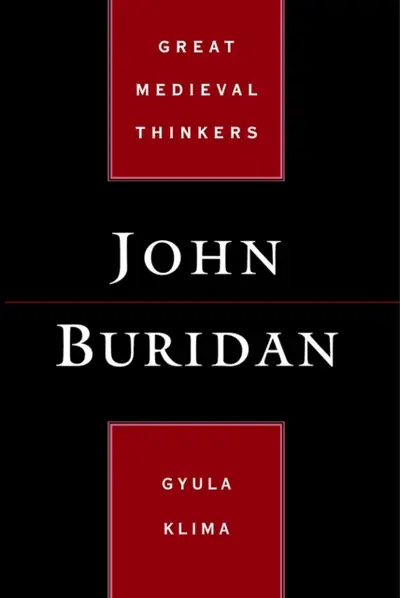
John Buridan
Price and availability
$33.99
Available in: Andorra, Austria, Australia, Belgium, Bulgaria, Canada, Switzerland, Cyprus, Czechia, Germany, Denmark, Estonia, Spain, Finland, France, United Kingdom, Guernsey, Greece, Croatia, Hungary, Ireland, Isle of Man, Iceland, Italy, Jersey, Japan, Liechtenstein, Lithuania, Luxembourg, Latvia, Monaco, Malta, Netherlands, Norway, Poland, Portugal, Romania, Sweden, Slovenia, Slovakia, San Marino, United States, Vatican City, South Africa
Stores: US, UK, Canada, EU, Australia.
Sign in to buyThe price is re-checked by the server before payment.
For personal use under the eBook licence.
- Format
- EPUB
- DRM
- Not stated by the publisher
- Language
- English
- Publisher
- Oxford University Press
- Published
- 23 December 2008
- ISBN
- 9780190291945
- Subjects
- Autobiography: general, Biography: religious & spiritual, Western philosophy: Medieval & Renaissance, c 500 to c 1600, Philosophy of religion, DNBA, DNBX, QDHF, QRAB
About this book
John Buridan (ca. 1300-1362) has worked out perhaps the most comprehensive account of nominalism in the history of Western thought, the philosophical doctrine according to which the only universals in reality are "e;names"e;: the common terms of our language and the common concepts of our minds. But these items are universal only in their signification; they are singular entities like any other in reality. This book examines what is most intriguing to contemporary readers in Buridan's medieval philosophical system: his nominalist account of the relationship between language, thought and reality. The main focus of the discussion is Buridan's deployment of the Ockhamist conception of a "e;mental language"e; for mapping the complex structures of written and spoken human languages onto a parsimoniously construed reality. Concerning these linguistic structures, this book carefully analyzes Buridan's conception of the radical conventionality of written and spoken languages, in contrast to the natural semantic features of concepts. The discussion pays special attention to Buridan's token-based semantics of terms and propositions, his conception of existential import, ontological commitment, truth, and logical validity. Finally, the book presents a detailed discussion of how these logical devices allow Buridan to maintain his nominalist position without giving up Aristotelian essentialism or yielding to skepticism, and pays special attention to contemporary concerns with these issues.
Bibliographic data © Gardners Books Ltd.