EPUB · English
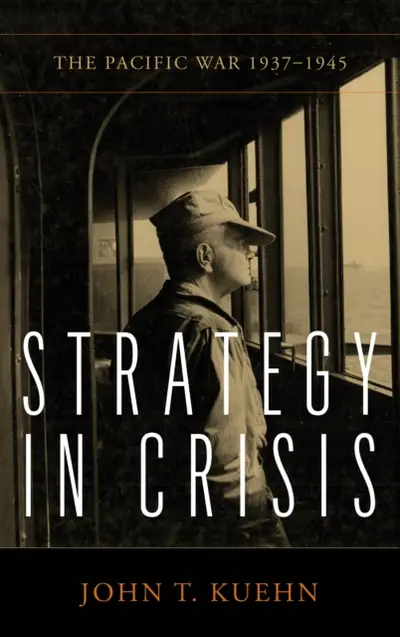
Strategy in Crisis
The Pacific War, 1937-1945
Price and availability
$31.99
Available in: Andorra, Austria, Australia, Belgium, Bulgaria, Canada, Switzerland, Cyprus, Czechia, Germany, Denmark, Estonia, Spain, Finland, France, United Kingdom, Guernsey, Greece, Croatia, Hungary, Ireland, Isle of Man, Iceland, Italy, Jersey, Japan, Liechtenstein, Lithuania, Luxembourg, Latvia, Monaco, Malta, Netherlands, Norway, Poland, Portugal, Romania, Sweden, Slovenia, Slovakia, San Marino, United States, Vatican City, South Africa
Stores: US, UK, Canada, EU, Australia.
Sign in to buyThe price is re-checked by the server before payment.
For personal use under the eBook licence.
- Format
- EPUB
- DRM
- Not stated by the publisher
- Language
- English
- Publisher
- Naval Institute Press
- Published
- 15 November 2023
- ISBN
- 9781682477663
- Subjects
- East Asia, Far East, c 1939 to c 1945 (including WW2), 20th century history: c 1900 to c 2000, Second World War, Naval forces & warfare, Naval forces and warfare, Military and defence strategy, Military history, Second World War
About this book
The Pacific War (1937-1945) remains a crucial topic for strategic discussion, especially as Japans push for a broader conflict in 1941 still fascinates historians. That regional push grew into a wider world war with all the major maritime powers, as well as the Soviet Union, in a conflict which challenged the allied response in Asia and beyond. John T. Kuehn examines the Pacific War from the vantage point of strategy and the execution of that strategy. The allies entered an ongoing Sino-Japanese War in China (1937-1945) which shaped the implementation of strategic decision making for the larger campaigns of The Pacific War. The Pacific War is often regarded as a conflict between the United States and Japan, but it involved a far greater cast of national characters, and the strategic calculations of these actors are addressed by the author in concise detail. The actions of the powers, such as the Dutch, British, Australians, New Zealanders, and the Soviet Union as well as the two primary nations, the U.S. and Empire of Japan, are considered through the strategic paradigm. The author, looking at the strategy of Imperial Japan as well as that of the U.S., concludes that the Axis failures in terms of coalition strategy continued throughout the war, even as the Allies strengthened coalition warfare along fronts.
Bibliographic data © Gardners Books Ltd.