PDF · English
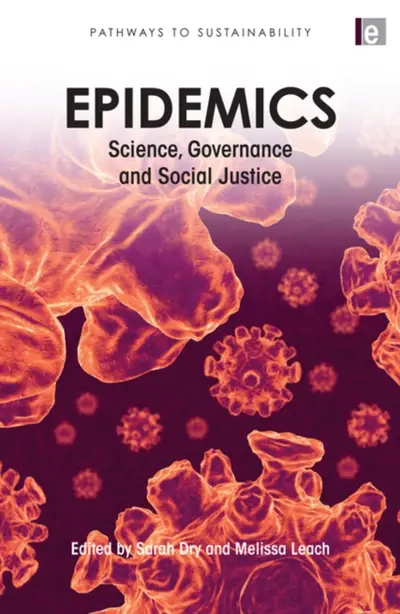
Epidemics
Science, Governance and Social Justice
Price and availability
$75.99
Available in: Andorra, Austria, Australia, Belgium, Bulgaria, Canada, Switzerland, Cyprus, Czechia, Germany, Denmark, Estonia, Spain, Finland, France, United Kingdom, Guernsey, Greece, Croatia, Hungary, Ireland, Isle of Man, Iceland, Italy, Jersey, Japan, Liechtenstein, Lithuania, Luxembourg, Latvia, Monaco, Malta, Netherlands, Norway, Poland, Portugal, Romania, Sweden, Slovenia, Slovakia, San Marino, United States, Vatican City, South Africa
Stores: US, UK, Canada, EU, Australia.
Sign in to buyThe price is re-checked by the server before payment.
For personal use under the eBook licence.
- Format
- DRM
- Not stated by the publisher
- Language
- English
- Publisher
- Taylor & Francis
- Published
- 23 September 2010
- ISBN
- 9781136532221
- Subjects
- Illness & addiction: social aspects, Public health & preventive medicine, Epidemiology & medical statistics, World, Social discrimination and social justice, International relations, Public health and preventive medicine
About this book
Recent disease events such as SARS, H1N1 and avian influenza, and haemorrhagic fevers have focussed policy and public concern as never before on epidemics and so-called 'emerging infectious diseases'. Understanding and responding to these often unpredictable events have become major challenges for local, national and international bodies. All too often, responses can become restricted by implicit assumptions about who or what is to blame that may not capture the dynamics and uncertainties at play in the multi-scale interactions of people, animals and microbes. As a result, policies intended to forestall epidemics may fail, and may even further threaten health, livelihoods and human rights. The book takes a unique approach by focusing on how different policy-makers, scientists, and local populations construct alternative narratives-accounts of the causes and appropriate responses to outbreaks- about epidemics at the global, national and local level. The contrast between emergency-oriented, top-down responses to what are perceived as potentially global outbreaks and longer-term approaches to diseases, such as AIDS, which may now be considered endemic, is highlighted. Case studies-on avian influenza, SARS, obesity, H1N1 influenza, HIV/AIDS, tuberculosis, and haemorrhagic fevers-cover a broad historical, geographical and biological range. As this book explores, it is often the most vulnerable members of a population-the poor, the social excluded and the already ill-who are likely to suffer most from epidemic diseases. At the same time, they may be less likely to benefit from responses that may be designed from a global perspective that neglects social, ecological and political conditions on the ground. This book aims to bring the focus back to these marginal populations to reveal the often unintended consequences of current policy responses to epidemics. Important implications emerge - for how epidemics are thought about and represented; for how surveillance and response is designed; and for whose knowledge and perspectives should be included. Published in association with the Economic and Social Research Council (ESRC)
Bibliographic data © Gardners Books Ltd.