PDF · English
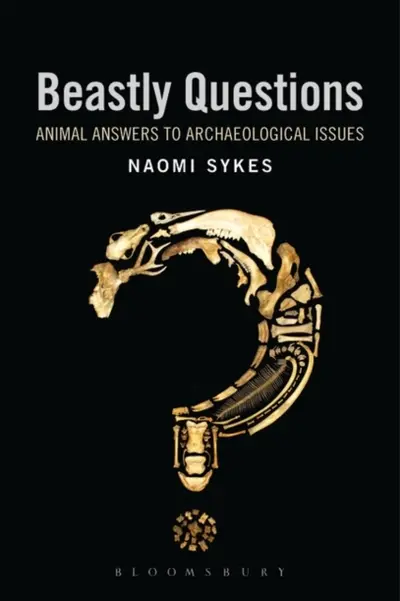
Beastly Questions
Animal Answers to Archaeological Issues
Price and availability
$42.99
Available in: Andorra, Austria, Australia, Belgium, Bulgaria, Canada, Switzerland, Cyprus, Czechia, Germany, Denmark, Estonia, Spain, Finland, France, United Kingdom, Guernsey, Greece, Croatia, Hungary, Ireland, Isle of Man, Iceland, Italy, Jersey, Japan, Liechtenstein, Lithuania, Luxembourg, Latvia, Monaco, Malta, Netherlands, Norway, Poland, Portugal, Romania, Sweden, Slovenia, Slovakia, San Marino, United States, Vatican City, South Africa
Stores: US, UK, Canada, EU, Australia.
Sign in to buyThe price is re-checked by the server before payment.
For personal use under the eBook licence.
- Format
- DRM
- Not stated by the publisher
- Language
- English
- Publisher
- Bloomsbury Publishing
- Published
- 28 August 2014
- Pages
- 208
- ISBN
- 9781472514943
- Subjects
- Archaeology, Archaeological science, methodology & techniques, Zoology & animal sciences, NK, NKX, Zoology and animal sciences
About this book
Zooarchaeology, or the study of ancient animals, is a frequently side-lined subject in archaeology. This is bizarre given that the archaeological record is composed largely of debris from human animal relationships (be they in the form of animal bones, individual artifacts or entire landscapes) and that many disciplines, including anthropology, sociology, and geography, recognise human animal interactions as a key source of information for understanding cultural ideology. By integrating knowledge from archaeological remains with evidence from texts, iconography, social anthropology and cultural geography, Beastly Questions: Animal Answers to Archaeological Issues seeks to encourage archaeological students, researchers and those working in the commercial sector to offer more engaging interpretations of the evidence at their disposal. Going beyond the simple confines of 'what people ate', this accessible but in-depth study covers a variety of high-profile topics in European archaeology and provides novel interpretations of mainstream archaeological questions. This includes cultural responses to wild animals, the domestication of animals and its implications on human daily practice, experience and ideology, the transportation of species and the value of incorporating animals into landscape research, the importance of the study of foodways for understanding past societies and how animal studies can help us to comprehend issues of human identity and ideology: past, present and future.
Bibliographic data © Gardners Books Ltd.