PDF · English
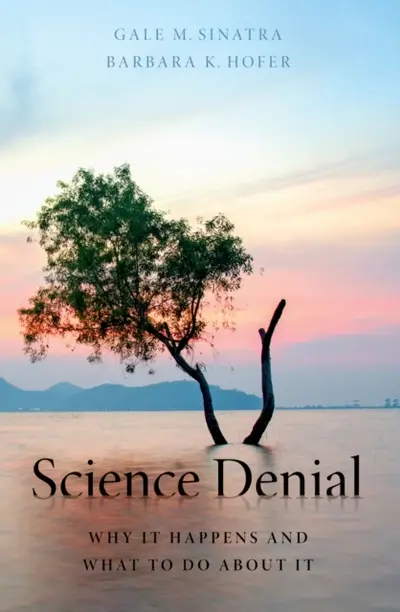
Science Denial
Why It Happens and What to Do About It
Price and availability
$24.99
Available in: Andorra, Austria, Australia, Belgium, Bulgaria, Canada, Switzerland, Cyprus, Czechia, Germany, Denmark, Estonia, Spain, Finland, France, United Kingdom, Guernsey, Greece, Croatia, Hungary, Ireland, Isle of Man, Iceland, Italy, Jersey, Japan, Liechtenstein, Lithuania, Luxembourg, Latvia, Monaco, Malta, Netherlands, Norway, Poland, Portugal, Romania, Sweden, Slovenia, Slovakia, San Marino, United States, Vatican City, South Africa
Stores: US, UK, Canada, EU, Australia.
Sign in to buyThe price is re-checked by the server before payment.
For personal use under the eBook licence.
- Format
- DRM
- Not stated by the publisher
- Language
- English
- Publisher
- Oxford University Press
- Published
- 22 June 2021
- ISBN
- 9780190944698
- Subjects
- Social, group or collective psychology, Cognition & cognitive psychology, Popular science, Social, group or collective psychology, Cognition and cognitive psychology, Popular science
About this book
How do individuals decide whether to accept human causes of climate change, vaccinate their children against childhood diseases, or practice social distancing during a pandemic? Democracies depend on educated citizens who can make informed decisions for the benefit of their health and well-being, as well as their communities, nations, and planet. Understanding key psychological explanations for science denial and doubt can help provide a means for improving scientific literacy and understanding-critically important at a time when denial has become deadly. In Science Denial: Why It Happens and What to Do About It, the authors identify the problem and why it matters and offer tools for addressing it. This book explains both the importance of science education and its limitations, shows how science communicators may inadvertently contribute to the problem, and explains how the internet and social media foster misinformation and disinformation. The authors focus on key psychological constructs such as reasoning biases, social identity, epistemic cognition, and emotions and attitudes that limit or facilitate public understanding of science, and describe solutions for individuals, educators, science communicators, and policy makers. If you have ever wondered why science denial exists, want to know how to understand your own biases and those of others, and would like to address the problem, this book will provide the insights you are seeking.
Bibliographic data © Gardners Books Ltd.