PDF · English
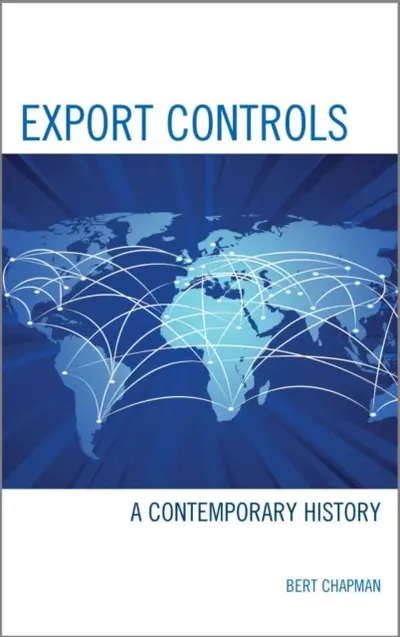
Export Controls
A Contemporary History
Price and availability
$60.99
Available in: Andorra, Austria, Australia, Belgium, Bulgaria, Canada, Switzerland, Cyprus, Czechia, Germany, Denmark, Estonia, Spain, Finland, France, United Kingdom, Guernsey, Greece, Croatia, Hungary, Ireland, Isle of Man, Iceland, Italy, Jersey, Japan, Liechtenstein, Lithuania, Luxembourg, Latvia, Monaco, Malta, Netherlands, Norway, Poland, Portugal, Romania, Sweden, Slovenia, Slovakia, San Marino, United States, Vatican City, South Africa
Stores: US, UK, Canada, EU, Australia.
Sign in to buyThe price is re-checked by the server before payment.
For personal use under the eBook licence.
- Format
- DRM
- Not stated by the publisher
- Language
- English
- Publisher
- Bloomsbury Publishing (USA)
- Published
- 30 October 2013
- Pages
- 444
- ISBN
- 9780761862345
- Subjects
- The Americas, USA, History of the Americas, Society & culture: general, Central government policies, Economic growth, International trade, Communications engineering / telecommunications, The Americas, United States of America, USA, JB, Central / national / federal government policies, Economic growth, International trade and commerce, NHK, Communications engineering / telecommunications
About this book
International trade plays an enormous role in economic growth and prosperity. This activity can also be used to transfer military equipment, knowledge, and technology to hostile governments and transnational terrorist and criminal organizations seeking to attack and destroy their enemies. The U.S. and other countries have used economic sanctions such as export controls to try to restrict and eliminate the transfer of weapons and financial assets to these governments and organizations. This work examines how the U.S. has attempted to restrict the export of national security sensitive equipment, finance, knowledge, and technology since World War II with varying degrees of success and failure. It also examines how multiple U.S. Government agencies, nongovernmental organizations, and international government organizations seek to influence U.S. international trade, foreign, and security policies while concluding that some export controls are essential for promoting and defending U.S. national security interests.
Bibliographic data © Gardners Books Ltd.