EPUB · English
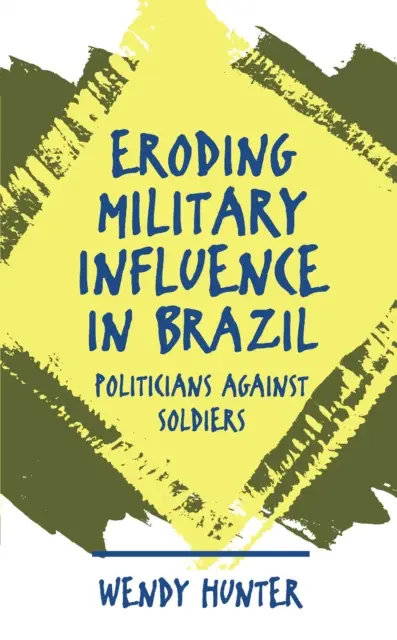
Eroding Military Influence in Brazil
Politicians Against Soldiers
Price and availability
$40.99
Available in: Andorra, Austria, Australia, Belgium, Bulgaria, Canada, Switzerland, Cyprus, Czechia, Germany, Denmark, Estonia, Spain, Finland, France, United Kingdom, Guernsey, Greece, Croatia, Hungary, Ireland, Isle of Man, Iceland, Italy, Jersey, Japan, Liechtenstein, Lithuania, Luxembourg, Latvia, Monaco, Malta, Netherlands, Norway, Poland, Portugal, Romania, Sweden, Slovenia, Slovakia, San Marino, United States, Vatican City, South Africa
Stores: US, UK, Canada, EU, Australia.
Sign in to buyThe price is re-checked by the server before payment.
For personal use under the eBook licence.
- Format
- EPUB
- DRM
- Not stated by the publisher
- Language
- English
- Publisher
- The University of North Carolina Press
- Published
- 9 November 2000
- ISBN
- 9780807862209
- Subjects
- South America, Brazil, c 1980 to c 1990, c 1990 to c 2000, History of the Americas, Political science & theory, Comparative politics, Political structures: democracy, Central government policies, South America, Comparative politics, History of the Americas
About this book
Wendy Hunter explores civil-military relations in Brazil following the transition to civilian leadership in 1985. She documents a marked, and surprising, decline in the political power of the armed forces, even as they have remained involved in national policy making. To account for the success of civilian politicians, Hunter invokes rational-choice theory in arguing that politicians will contest even powerful forces in order to gain widespread electoral support.Many observers expected Brazils fledgling democracy to remain under the firm direction of the military, which had tightly controlled the transition from authoritarian to civilian rule. Hunter carefully refutes this conventional wisdom by demonstrating the ability of even a weak democratic regime to expand its autonomy relative to a once-powerful military, thanks to the electoral incentives that motivate civilian politicians. Based on interviews with key participants and on extensive archival research, Hunters analysis of developments in Brazil suggests a more optimistic view of the future of civilian democratic rule in Latin America.
Bibliographic data © Gardners Books Ltd.