EPUB · English
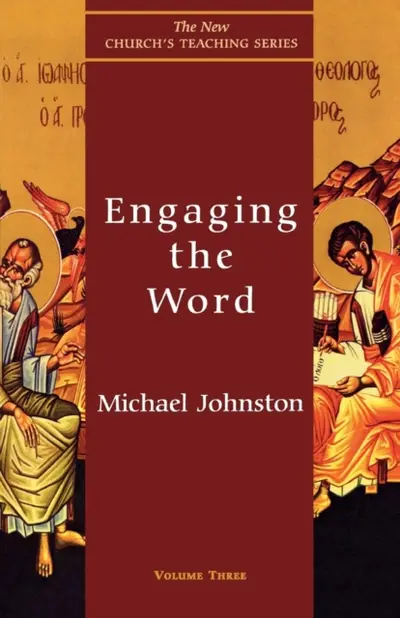
Engaging the Word
Price and availability
$18.99
Available in: Andorra, Austria, Australia, Belgium, Bulgaria, Canada, Switzerland, Cyprus, Czechia, Germany, Denmark, Estonia, Spain, Finland, France, United Kingdom, Guernsey, Greece, Croatia, Hungary, Ireland, Isle of Man, Iceland, Italy, Jersey, Japan, Liechtenstein, Lithuania, Luxembourg, Latvia, Monaco, Malta, Netherlands, Norway, Poland, Portugal, Romania, Sweden, Slovenia, Slovakia, San Marino, United States, Vatican City, South Africa
Stores: US, UK, Canada, EU, Australia.
Sign in to buyThe price is re-checked by the server before payment.
For personal use under the eBook licence.
- Format
- EPUB
- DRM
- Not stated by the publisher
- Language
- English
- Publisher
- Bloomsbury Publishing (USA)
- Published
- 28 January 1998
- Pages
- 181
- ISBN
- 9781461624080
- Subjects
- Anglican & Episcopalian Churches, Church of England, Old Testaments, New Testaments, Christian theology, Judaism: sacred texts, Criticism & exegesis of sacred texts, QRJF, QRM, QRMB31, QRMF12, QRMF13, QRVC
About this book
The companion to Volume 2 of The New Church's Teaching Series, Roger Ferlo's Opening the Bible, Michael Johnston's Engaging the Word teaches us how to use the critical and practical tools for reading the Bible described by Ferlo to interpret the Hebrew and Christian scriptures: what did they mean for their original audience and what do they mean for us today?Johnston introduces us to the key terms and concepts of biblical criticism that show us how to read Scripture on three key levels: the literal, historical, and prophetic. He explores with us passages that touch on questions of ethics, the nature of God, the teachings of Jesus, and eschatology, and offers vivid insights into the physical setting and geography of the Bible.Above all, the purpose of Engaging the Word is to help us become people who can read and interpret the Bible intelligently and perceptively. It offers the fundamental questions that we must ask of any biblical text in order to enter fully into its meaning for us and for our worshiping community: Who wrote the passage? When was it written? What does it actually say? For what community or group was it written? What was its message for that community? What is its message for us today?
Bibliographic data © Gardners Books Ltd.