EPUB · English
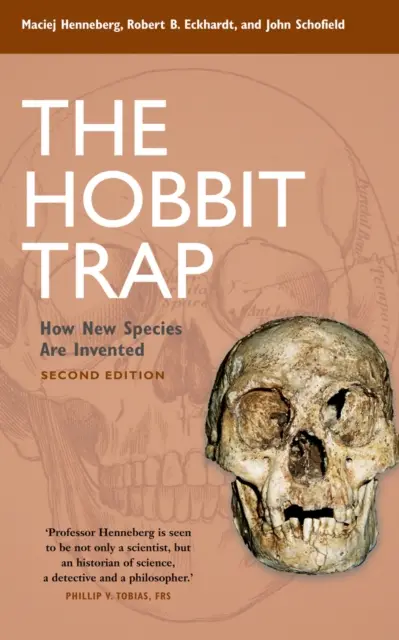
Hobbit Trap
How New Species Are Invented
Price and availability
$59.99
Available in: Andorra, Austria, Australia, Belgium, Bulgaria, Canada, Switzerland, Cyprus, Czechia, Germany, Denmark, Estonia, Spain, Finland, France, United Kingdom, Guernsey, Greece, Croatia, Hungary, Ireland, Isle of Man, Iceland, Italy, Jersey, Japan, Liechtenstein, Lithuania, Luxembourg, Latvia, Monaco, Malta, Netherlands, Norway, Poland, Portugal, Romania, Sweden, Slovenia, Slovakia, San Marino, United States, Vatican City, South Africa
Stores: US, UK, Canada, EU, Australia.
Sign in to buyThe price is re-checked by the server before payment.
For personal use under the eBook licence.
- Format
- EPUB
- DRM
- Not stated by the publisher
- Language
- English
- Publisher
- Taylor & Francis
- Published
- 3 June 2016
- ISBN
- 9781315418278
- Subjects
- Anthropology, Physical anthropology, Philosophy of science, Evolution, Indonesia, History of science, Evolutionary anthropology / Human evolution
About this book
When scientists found the remains of a tiny hominid on an Indonesian in 2004, they claimed they found a totally new species of human ancestor (homo floresiensis), and called it a Hobbit. Film crews rolled in and the little creature took the world by storm, but a group of prominent scientists, including Maciej Henneberg and Robert Eckhardt, smelled a rat. They refuted the data-the size and shape of bones, the inferences about height-and they raised fundamental questions about scientific method, revealing cultural and political pressures that lead to the wide acceptance of unsupported theories. The Hobbit Trap describes how the case against the "e;new species"e; theory developed and offers an important critique of the species concept in evolution. In this thoroughly updated second edition, the authors include new data and analysis of the Flores fossils, and expand their important analysis of scientific practice, calling for a new movement to reverse the decline in scientific standards and the rise in scientific politics. This lively and important challenge to conventional wisdom is accessible to the general reader and makes a stimulating addition to courses on the history and philosophy of science, evolution and physical anthropology.
Bibliographic data © Gardners Books Ltd.