EPUB · English
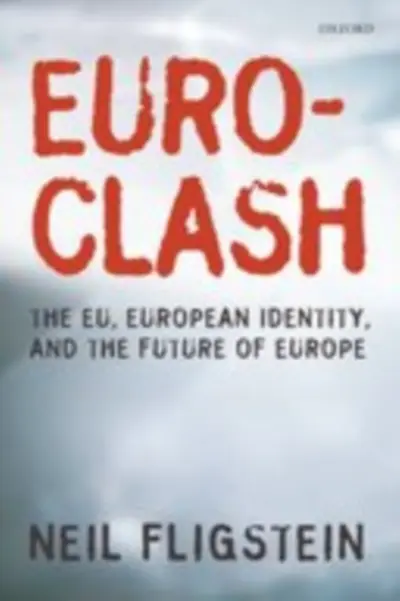
Euroclash
The EU, European Identity, and the Future of Europe
Price and availability
$37.99
Available in: Andorra, Austria, Australia, Belgium, Bulgaria, Canada, Switzerland, Cyprus, Czechia, Germany, Denmark, Estonia, Spain, Finland, France, United Kingdom, Guernsey, Greece, Croatia, Hungary, Ireland, Isle of Man, Iceland, Italy, Jersey, Japan, Liechtenstein, Lithuania, Luxembourg, Latvia, Monaco, Malta, Netherlands, Norway, Poland, Portugal, Romania, Sweden, Slovenia, Slovakia, San Marino, United States, Vatican City, South Africa
Stores: US, UK, Canada, EU, Australia.
Sign in to buyThe price is re-checked by the server before payment.
For personal use under the eBook licence.
- Format
- EPUB
- DRM
- Not stated by the publisher
- Language
- English
- Publisher
- Oxford University Press
- Published
- 8 October 2009
- ISBN
- 9780191647949
- Subjects
- Europe, EU (European Union), Regional studies, EU & European institutions, Political economy, Europe, Regional / International studies, Political economy
About this book
This is an open access title. It is available to read and download as a free PDF version on Oxford Academic and is made available under a Creative Commons Attribution-NonCommercial 4.0 International licence. The European Union's market integration project has dramatically altered economic activity around Europe. This book presents extensive evidence on how trade has increased, jobs have been created, and European business has been reorganized. However, changes in the economy have been accompanied by dramatic changes in how people from different societies interact. In this book Neil Fligstein argues provocatively that these changes have produced a truly transnational - European - society. The book explores the nature of that society and its relationship to the creation of a European identity, popular culture, and politics. Much of the current political conflict around Europe can be attributed to who is and who is not involved in European society. Business owners, managers, professionals, white-collar workers, the educated, and the young have all benefited from European economic integration, specifically by interacting more and more with their counterparts in other societies. They tend to think of themselves as Europeans. Older, poorer, less-educated, and blue-collar citizens have benefited less. They view the EU as intrusive on national sovereignty, or they fear its pro-business orientation will overwhelm the national welfare states. They have maintained national identities. There is a third group of mainly-middle class citizens who see the EU in mostly positive terms and sometimes - but not always - think of themselves as Europeans. It is this swing group that is most critical for the future of the European project. If they favor more European cooperation, politicians will oblige. But, if they prefer that policies remain wedded to the nation, European cooperation will stall. Written in an accessible style this is a major new interpretation of the drive to European integration and essential reading for all those with an interest in the topic.
Bibliographic data © Gardners Books Ltd.