EPUB · English
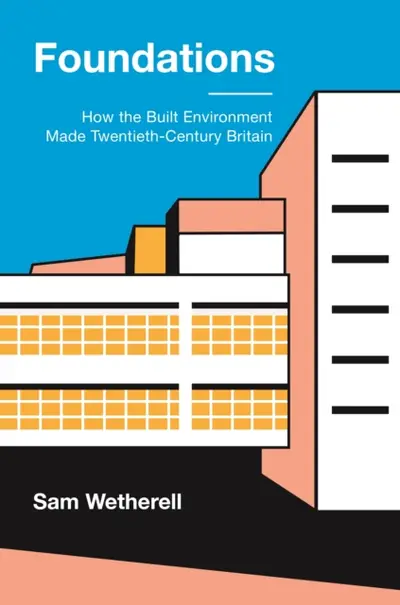
Foundations
How the Built Environment Made Twentieth-Century Britain
Price and availability
$29.99
Available in: Andorra, Austria, Australia, Belgium, Bulgaria, Canada, Switzerland, Cyprus, Czechia, Germany, Denmark, Estonia, Spain, Finland, France, United Kingdom, Guernsey, Greece, Croatia, Hungary, Ireland, Isle of Man, Iceland, Italy, Jersey, Japan, Liechtenstein, Lithuania, Luxembourg, Latvia, Monaco, Malta, Netherlands, Norway, Poland, Portugal, Romania, Sweden, Slovenia, Slovakia, San Marino, United States, Vatican City, South Africa
Stores: US, UK, Canada, EU, Australia.
Sign in to buyThe price is re-checked by the server before payment.
For personal use under the eBook licence.
- Format
- EPUB
- DRM
- Not stated by the publisher
- Language
- English
- Publisher
- Princeton University Press
- Published
- 13 October 2020
- ISBN
- 9780691208558
- Subjects
- Art & design styles: Modernist design & Bauhaus, Art & design styles: from c 1960, City & town planning - architectural aspects, History of architecture, British & Irish history, 20th century history: c 1900 to c 2000, Postwar 20th century history, from c 1945 to c 2000, Social & cultural history, Urban & municipal planning, United Kingdom, Great Britain, History of architecture, Social and cultural history, Urban and municipal planning and policy
About this book
An urban history of modern Britain, and how the built environment shaped the nation's politicsFoundations is a history of twentieth-century Britain told through the rise, fall, and reinvention of six different types of urban space: the industrial estate, shopping precinct, council estate, private flats, shopping mall, and suburban office park. Sam Wetherell shows how these spaces transformed Britain's politics, economy, and society, helping forge a midcentury developmental state and shaping the rise of neoliberalism after 1980.From the mid-twentieth century, spectacular new types of urban space were created in order to help remake Britain's economy and society. Government-financed industrial estates laid down infrastructure to entice footloose capitalists to move to depressed regions of the country. Shopping precincts allowed politicians to plan precisely for postwar consumer demand. Public housing modernized domestic life and attempted to create new communities out of erstwhile strangers. In the latter part of the twentieth century many of these spaces were privatized and reimagined as their developmental aims were abandoned. Industrial estates became suburban business parks. State-owned shopping precincts became private shopping malls. The council estate was securitized and enclosed. New types of urban space were imported from American suburbia, and planners and politicians became increasingly skeptical that the built environment could remake society. With the midcentury built environment becoming obsolete, British neoliberalism emerged in tense negotiation with the awkward remains of built spaces that had to be navigated and remade.Taking readers to almost every major British city as well as to places in the United States and Britain's empire, Foundations highlights how some of the major transformations of twentieth-century British history were forged in the everyday spaces where people lived, worked, and shopped.
Bibliographic data © Gardners Books Ltd.