EPUB · English
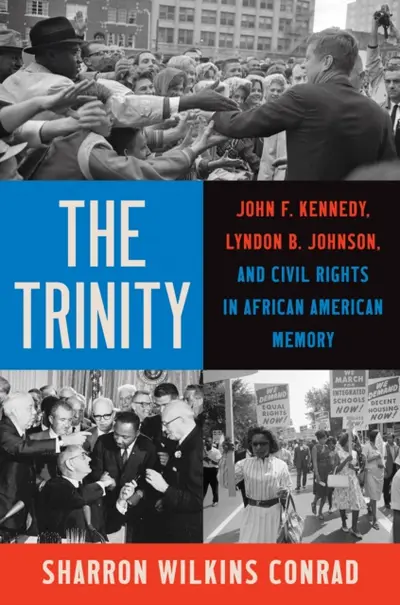
Trinity
John F. Kennedy, Lyndon B. Johnson, and Civil Rights in African American Memory
Price and availability
$202.99
Available in: Andorra, Austria, Australia, Belgium, Bulgaria, Canada, Switzerland, Cyprus, Czechia, Germany, Denmark, Estonia, Spain, Finland, France, United Kingdom, Guernsey, Greece, Croatia, Hungary, Ireland, Isle of Man, Iceland, Italy, Jersey, Japan, Liechtenstein, Lithuania, Luxembourg, Latvia, Monaco, Malta, Netherlands, Norway, Poland, Portugal, Romania, Sweden, Slovenia, Slovakia, San Marino, United States, Vatican City, South Africa
Stores: US, UK, Canada, EU, Australia.
Sign in to buyThe price is re-checked by the server before payment.
For personal use under the eBook licence.
- Format
- EPUB
- DRM
- Not stated by the publisher
- Language
- English
- Publisher
- The University of North Carolina Press
- Published
- 9 June 2026
- ISBN
- 9781469694467
- Subjects
- USA, 20th century, History of the Americas, 20th century history: c 1900 to c 2000, Ethnic studies, Black & Asian studies, Human rights, Civil rights & citizenship, United States of America, USA, Ethnic studies / Ethnicity, Human rights, civil rights, History of the Americas
About this book
A striking triptych once displayed in countless African American households, the Trinity typically features Jesus Christ, Martin Luther King Jr., and John F. Kennedy. More than decoration, these portraits were deliberate acts of memory and quiet resistance, a medium through which African Americans asserted their own narratives of hope, leadership, and the fight for justice.In this provocative history, Sharron Wilkins Conrad traces the Trinity across several decades, showing how African Americans didnt merely remember the civil rights movement; they shaped its meaning. The Trinity reveals why Kennedys image hung beside King and Christ, while Lyndon B. Johnson, despite signing landmark legislation such as the 1964 Civil Rights Act, remained largely unheralded. Kennedys charisma, symbolic promise, and perceived martyrdom placed him among sacred icons, while Johnsonseen as transactional and confronted by the eras growing impatiencenever secured the same emotional legacy. In a gripping exploration of memory and meaning-making, Conrad reveals how communities create historical truths by elevating some leaders, sidelining others, and preserving their own visions in defiance of the official record.
Bibliographic data © Gardners Books Ltd.